Neat (but voracious) caterpillar, Orgyia pseudotsugata

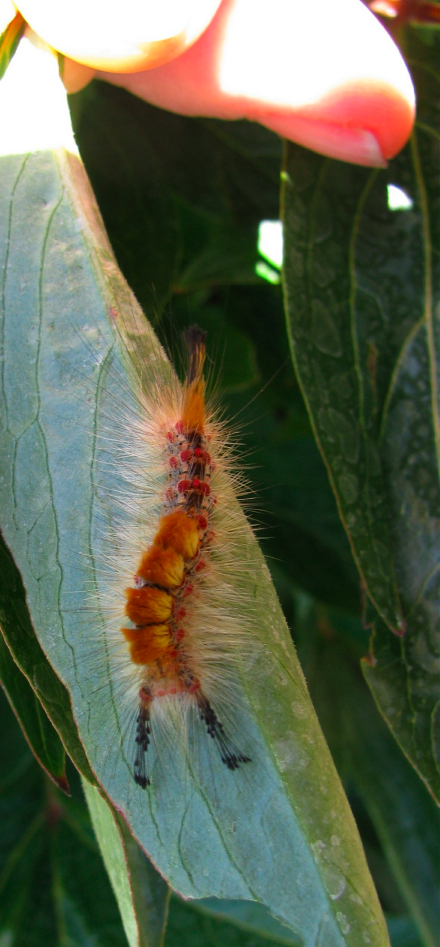
We found this caterpillar on a ground peony in our garden this morning.

Orgiya_pseudotsugata1.jpg

It is the larval form of the Douglas Fir Tussock Moth, Orgyia pseudotsugata. They are, like most caterpillars, voracious eaters and can have a devastating effect on Doug fir forests. Spraying, of pesticides or pheromones such as microbial insecticide Bacillus thuringiensis, and insect growth regulators, is often used against tussock moth infestations. Human activities, such as monoculture forest plantations, suppression of forest fires, and elimination of potential predators, have encouraged tussock moth proliferation.
Orgiya_pseudotsugata2.jpg

We were able to make a pretty firm identification of the caterpillar thanks to a terrific book, Lepidoptera of the Pacific Northwest: Caterpillars and Adults, by Jeffrey C. Miller and Paul Hammond. [Forest Health Enterprise. H.J. Andrews Publication Number 3739. December 2003. The authors work at Oregon State University in Corvallis.] Each page has a good photo of the caterpillar and adult forms of one species, with descriptions of appearance and ecology, such as what plants they are likely to be found on. Great book! Your tax dollars at work!

You can view or download the book as sections in pdf form. This moth is on page 175 of this pdf section. The book, an oversize paperback, is published by the USDA Forest Service, and was available several years ago (& still may be), free or very cheap, from
Richard C. Reardon rreardon@fs.fed.us
USDA Forest Service
180 Canfield St.
Morgantown WV 26505

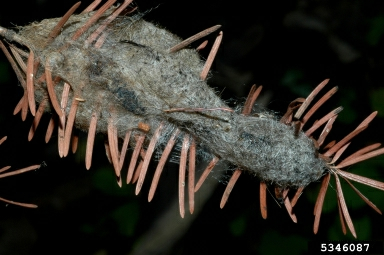
Here’s a photo of the cocoon form, woven around dead Doug fir needles. [Photo by William M. Ciesla, Forest Health Management International] Lots more information and photos of Orgyia pseudotsugata here and here.
Orgyia_pseudotsugata_cocoon.jpg

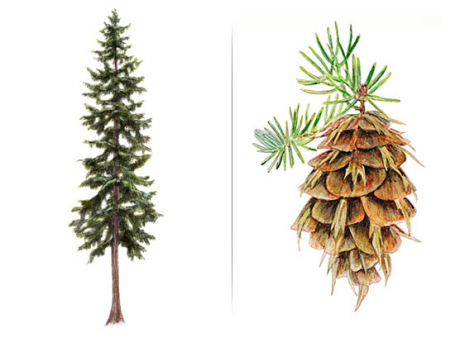
The Douglas Fir (Pseudotsuga menziesii) is an extremely common forest species in the West, a primary source of lumber, and is the state tree of Oregon. Notice the distinctive cone. [Image from Encarta.]
Pseudotsuga_menziesii.jpg

What bees do in the winter

This summer we found out that a swarm of bees had moved into a cavity in a dead tree on our place.

BeeTree.jpg

I had to be quick to get this closeup (below) before the bees began to let me know I was not welcome.

Bees1.jpg

When the weather cooled they became a little less active and I could get even closer, briefly.

Bees2.jpg

As winter came on, I wondered if the bees would wall off part of the opening, to keep warmer. I asked our local librarian, who is also a beekeeper, and she told me that this wasn’t typical bee behavior (although they may seal small cracks), and that they’d be fine in our climate. Somewhere further north, I assume they choose more protected locations.

Bees stay warm by clustering together and doing the bee equivalent of shivering to generate a little warmth. They live on stored honey during this time. Some individuals will die over the winter and their bodies will be hauled out of the hive in spring. But the majority, and the queen, will survive.

Now that we’ve had some snow, and 18°F days, I went to check on the bees. None were visible and I got closer and closer until my head was right at the opening. And I could hear this wonderful sound of the bees buzzing deep within their tree! I listened for a few minutes until the bees became aware of me and one flew up to send me on my way.

There are, according to Wikipedia, no honey bees native to North America, so this lot or their ancestors must have originated in a swarm of honey bees from a beekeeper’s hive. We are delighted to have them, and our librarian-beekeeper told me that many beekeepers are looking to honeybees who’ve survived on their own, for resistance to whatever is causing the colony collapse disorder that has wiped out so many bees in man-made hives. But “our” bees can just stay where they are as long as they like.

Transcendental Refreshment: Golden Peony and two poems

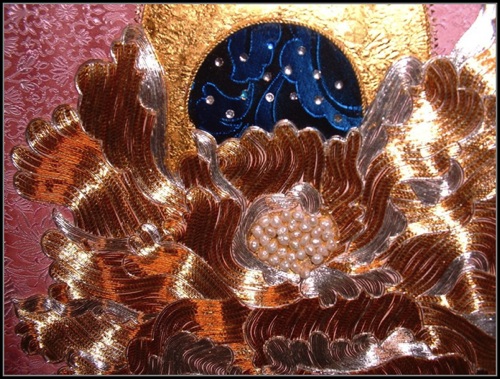
AmerTanka112center2.jpg

above, center peony detail of the textile work American Tanka 112 by Dan Barker. Gold and silver thread, gold leaf and pearls on fabric. See more here.

Wild Geese by Mary Oliver

You do not have to be good.
You do not have to walk on your knees
for a hundred miles through the desert, repenting.
You only have to let the soft animal of your body
love what it loves.
Tell me about despair, yours, and I will tell you mine.
Meanwhile the world goes on.
Meanwhile the sun and the clear pebbles of the rain
are moving across the landscapes,
over the prairies and the deep trees,
the mountains and the rivers.
Meanwhile the wild geese, high in the clean blue air,
are heading home again.
Whoever you are, no matter how lonely,
the world offers itself to your imagination,
calls to you like the wild geese, harsh and exciting–
over and over announcing your place
in the family of things.

© Mary Oliver

I Looked Up

I looked up and there it was
among the green branches of the pitchpines—

thick bird,
a ruffle of fire trailing over the shoulders and down the back—

color of copper, iron, bronze—
lighting up the dark branches of the pine.

What misery to be afraid of death.
What wretchedness, to believe only in what can be proven.

When I made a little sound
it looked at me, then it looked past me.

Then it rose, the wings enormous and opulent,
and, as I said, wreathed in fire.

© Mary Oliver

from Owls and other Fantasies, poems and essays (2003), by Mary Oliver.

More of her poetry can be found online at Poet Seers

Whales too polluted to be eaten by Faroe Islanders

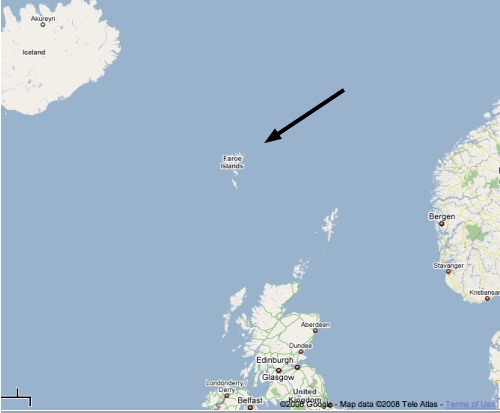
faroeIslMap2.jpg

You’d think living in the Faroe Islands, rainy chunks of basalt about midway between Norway and Iceland, would keep you out of the way of serious industrial pollution. We all know better these days, of course, but still: such a remote location!

New Scientist reports (28 November 2008) that the medical officers on the Faroe Islands have recommended an end to the consumption of whale meat from the thousands of pilot whales killed each year by islanders. It’s a traditional food which has kept off starvation in the past, but now the whales contain dangerous levels of mercury, PCBs, and DDT derivatives.

Tests on the people themselves have revealed “damage to fetal neural development, high blood pressure, and impaired immunity in children, as well as increased rates of Parkinson’s disease, circulatory problems and possibly infertility in adults.”

Mercury appears to be the pollutant causing the worst health problems, and the Faroese studies increase concerns about the risks of low levels of mercury in other populations.

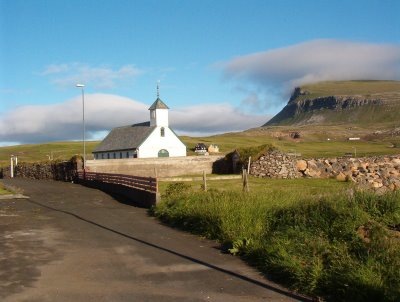
faroeIslChurch.jpg

Above, Church on the Faroe Islands. Photo source.

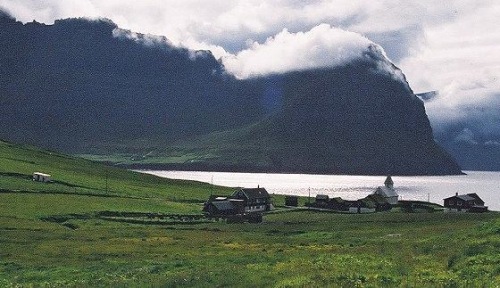
Below, a settlement on one of the 18 small islands. “Faroe” means “sheep”; early settlers brought sheep and oats to the islands, which are also home to many seabirds including puffins. Photo source.

faroeIslScene.jpg