Algae poses threat to humans as well as animals

Health departments have been trying to inform swimmers and pet owners that they should avoid water with visible algae, since ingesting it can cause severe and sudden illness including convulsions or even death. In our state, three dogs died last year after swimming at a reservoir. One died before his owner could even get him to the car, another died on the way to the vet.

Now, a recent report in the ProMED health tracking network calls our attention to human risks that don’t involved either entering or drinking the algae-contaminated water.

One man, whose dog died after a swim in the lake, was hospitalized last week [week of 19 Jul 2010] after he gave the dog a bath. Within days, the 43-year-old man began having trouble walking and lost
feeling in his arms and feet.

“We weren’t swimming in the lake because it’s disgusting,” said the
victim’s wife, whose husband, is still having trouble with memory loss and fatigue. “Our dog was just covered in that sludge, and my husband washed him.” Washington Examiner, July 30, 2010.

According to one doctor treating the Ohio man, his neurological problems may be permanent. But he’s better off than his dog, who died despite having the algae washed off.

The algae are in the “blue-green algae” family, and are actually not algae but photosynthesizing bacteria, called cyanobacteria. Blooms, or overgrowths, in bodies of water (fresh or saltwater) are encouraged by temperature change and increases in nutrients, often from agricultural runoff into the water. The cyanobacteria, like some algae, make toxins harmful to fish and mammals. Humans have been aware of this mostly through being poisoned by eating shellfish, which concentrate the toxins. The familiar warnings about “red tides” and issuance of “shellfish advisories” result from these conditions.

While it has been known that skin contact with toxic algae could produce illness in humans, the severe results from relatively small exposure—simply washing an algae-slimed dog—seem to be worse than expected.

The lake in Ohio is Grand Lake St. Marys; it’s the largest inland lake in the state by area, but is extremely shallow, with an average depth of only 5 to 7 feet. This shallow lake warms up more, and doesn’t dilute the runoff of agricultural fertilizer and livestock waste as much as if it held more water. Recent algae blooms have killed so many catfish that crews were shovelling up the dead fish. With the lake surrounded by warning signs, the area’s $160 million tourism industry has declined, and a boat race that draws about 30,000 people in late August each year has been cancelled.

Some algae are harmless, but there are many different algae or bacteria that can produce dangerous levels of toxins when they bloom. Some are more harmful than others but it’s foolish to take chances: keep yourself, and children and pets, well away from any water that has a visible algae presence. This can be greenish, reddish, or other colors. Or it can appear as just cloudiness or discoloration in the water, as foam or scum floating on top, as mats on the bottom, or actual filaments or pellets. And don’t let kids or pets wander to areas of a river, stream, or lake that you have not closely checked.

Algae by rocks.jpg

Source.

An Ohio factsheet sums up the methods of exposure, and known symptoms:

Skin contact: Contact with the skin may cause rashes, hives, or skin blisters (especially on the lips and under swimsuits).

Breathing of water droplets: Breathing aerosolizing (suspended water droplets-mist) from the lake water-related recreational activities and/or lawn irrigation can cause runny eyes and noses, a sore throat, asthma-like symptoms, or allergic reactions.

Swallowing water: Swallowing HAB-contaminated water can cause:
◦ Acute (immediate), severe diarrhea and vomiting
◦ Liver toxicity (abnormal liver function, abdominal pain, diarrhea and vomiting)
◦ Kidney toxicity
◦ Neurotoxicity (weakness, salivation, tingly fingers, numbness, dizziness, difficulties breathing, death)   Source.

Splashing of water in eyes, or inhaling droplets of contaminated water, can get the toxin into your system. One of the toxins from cyanobacteria, Saxitoxin is “reportedly one of the most toxic, non-protein substances known. It is known that the LD50 (median lethal dose) in mice is 8 micrograms/kilogram. Based on
a human weighing approx. 70 kg (154 lb), a lethal dose would be a
single dose of 0.2 mg.” [Source, ProMED report.]

How much is two-tenths of a milligram? There are a thousand milligrams in a gram, and a dime or a paper clip each weigh about 1 gram. So an amount of toxin weighing the same as two ten-thousandths of a paper clip may be lethal.

Algae,feet in water.jpg

Source.

These “Harmful Algal Blooms” can occur in large or small bodies of water; often, but not always, they are in areas where the waterflow is slow (near shore) or nonexistent (stagnant). Small pools or puddles separate from the main body of water can contain algal growth. Even in tiny amounts the toxins can have devastating and sudden effects of humans or animals.

Eating fish or shellfish from contaminated waters is dangerous too. Cooking does NOT render toxins safe.

Algal blooms can be very transient, appearing and disappearing in a matter of days to weeks. If you spot a possible instance and there are no warning signs, it may not have been found yet. Stay away from the water and call your local or state health department so they can track outbreaks, and put up signs.

For the state of Oregon, current advisories can be found online here. The HAB team can be reached by email at Hab.health@state.or.us, by phone: 971-673-0440; Toll Free: 877-290-6767; or by fax: 971-673-0457. Other states should have similar programs; your city or county health department ought to be able to tell you more.

Why are these toxic algae blooms becoming more common?

The short answer is, better growing conditions for algae. They thrive in warm water, and temperatures are going up. Nutrients (nitrogen and phosphorus) from human activities pour into streams, lakes, rivers, and the ocean, and act like Miracle-Gro for the algae. Sources include runoff from fields treated with fertilizer or manure, spraying partially treated sewage sludge, sewage overflows, and runoff from pastures.

What can be done?

Rising temperatures, that’s a big one. Let’s just look at eutrophication or over-nutrification of water, since that’s something where local efforts can have relatively immediate local effects. Obviously, better treatment of sewage (including livestock waste) and reduced use of fertilizers (in agriculture, on golf courses, in parks, and in our own personal yards) are important steps to work on. On July 1st, 16 states will begin enforcing laws that require dishwasher detergents to be almost phosphate-free. That’s a small but significant improvement; the legislator who introduced the bill into the Pennsylvania legislature estimated that 7% to 12% of the phosphorus entering sewage plants came from automatic dishwashing detergents. New guidelines from the federal Clean Water Act to reduce nitrogen and phosphorus have provided more impetus to these particular efforts.

Not so obvious steps:

At least one study found that use of organic fertilizers led to less nitrogen runoff than use of chemical fertilizers.

Remediation of areas where nitrogen is stored in soil, from decades of deposition by one means or another, is possible but expensive and slow.

And years of research is showing us, surprise surprise, that intact aquatic communities slow the trickle-down of nutrient pollution (from, say, creeks to streams to rivers to a lake) and seem to enable a body of water to better resist eutrophication. Dr. David Schindler (Professor of Biological Sciences, University of Alberta) has studied the problem for decades including 37 years of work on Lake 227, a small pristine lake in the Experimental Lakes region of northern Ontario. He says, for example, that overexploitation of piscivorous (fish-eating) fish seems to increase the effects of eutrophication. (His earlier work energized the campaign to reduce phosphorus pollution.)

A study along the Georgia coast suggests that tidal marsh soils protect aquatic ecosystems from eutrophication, caused by the accumulation of nutrients. And they sequester large amounts of carbon, helping us slow down climate change. I would expect similar results with regard to freshwater wetlands and marshes. When I was a zookeeper I worked with mechanical incubators for bird eggs, none of which was as reliable as one of those “bird-brained” hens of whatever species. We are told that the appropriate native herbivores—bison, wildebeest, and so on—produce more meat per acre and do less damage than introduced species like cattle. And now we’re coming around to seeing that oldmothernature is better at water purification than we are, if we leave existing systems intact (but we never do).
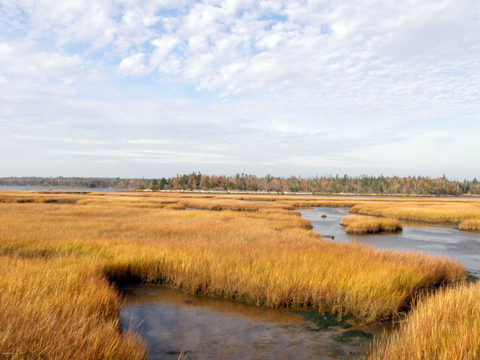
Salt Marsh.jpg

Salt Marsh near Dartmouth, Nova Scotia; more good photos of this marsh here.
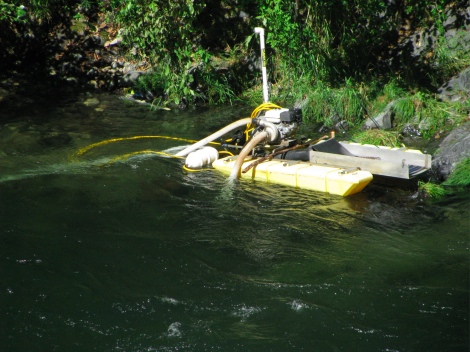
Siskiyou wildflowers we found today

We walked along a dirt road above the Applegate River. Warm and dusty, with the cool green river below. On the far side of the river there are houses, and tied up below one was a gas-powered dredge for sucking up sand and silt from the bottom or edges of the river, in search of gold. Any gold around here is powder or very small pieces; nothing you would think of as a nugget is likely to be found. Since the moratorium on dredging in the rivers of California more dredgers are mucking up our rivers.

dredge on the river.jpg

The first wildflower we saw was the rather spectacular Blazing Star (Mentzelia laevicaulis).

Mentzelia laevicaulis, Blazing star1.jpg

This plant likes dry gravelly roadcuts such as this one, and is found from British Columbia south through much of the West. Accounts say the flower is fragrant but we didn’t notice that.

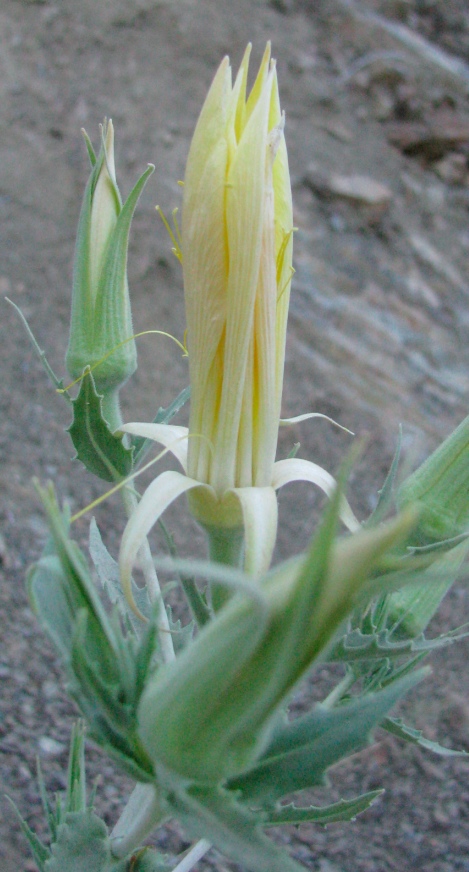
The buds are a pale dawn yellow. Or the color dawns should be.

Mentzelia laevicaulis, Blazing star, flower buds.jpg

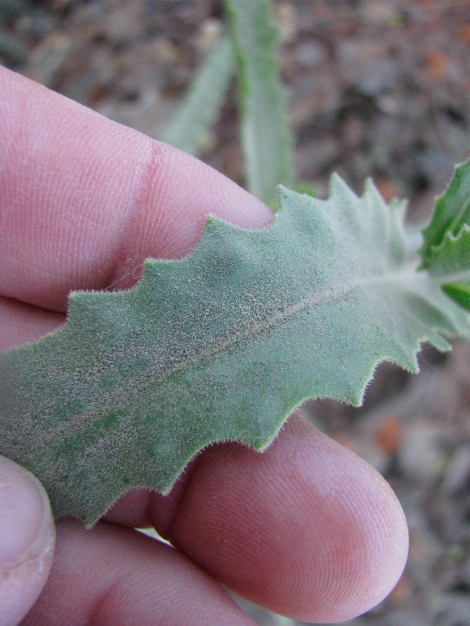
The leaves are distinctive: hairy and scalloped.

Mentzelia laevicaulis, Blazing star leaf close-up.jpg

Mentzelia was named by Linnaeus in honour of Christian Mentzel (1622-1701), a German physician, botanist and lexicographer. The epithet laevicaulis (laevi = smooth + caulis = stalk) refers to the comparatively smooth stems of this species in comparison to other Mentzelia species.” For this information on etymology, often impossible to find, I am indebted to the University of British Columbia’s Botany Photo of the Day site.

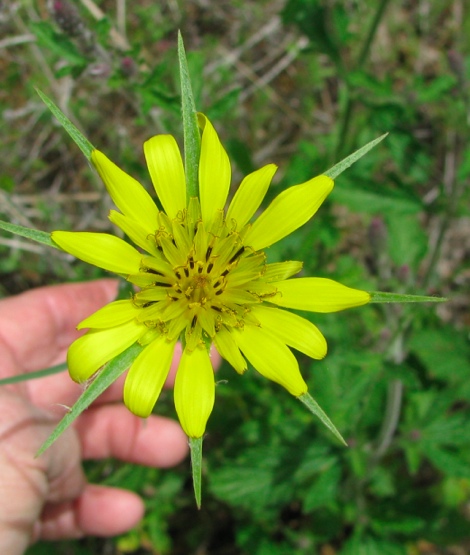
The flower is somewhat similar to one we saw back in mid-June, Yellow or Western Salsify (Tragopogon dubius), below. But Yellow Salsify is introduced, not native, and regarded as invasive in many areas. The root is “edible raw (slightly bitter, celery-like taste with a hint of cucumber) and cooked (smells like parsnips). The plant exudes a milky latex when cut.” Another species, T. porrifolius, has been known since Roman times for its edible roots and young shoots, and even cultivated. Europeans who introduced T. porrifolius to North America too, where it’s considered an “agricultural weed”, not quite as bad as “invasive”.

Tragopogon dubius  -Yellow Salsify,Western Salsify -flower.jpg

The Yellow Salsify leaf is narrow, not scalloped, and smooth rather than hairy.

Tragopogon dubius  -Yellow Salsify,Western Salsify - leaves.jpg

Large patches of Rabbit-Foot Clover (Trifolium arvense) lined the road. This is another European introduction.
Rabbit-Foot Clover.jpg

We were too late to see any with fresh blooms, so here they are from A Photo Flora of the Devon and Cornwall Peninsula.

Rabbit-foot clover, Trifolium arvense.jpg

Among the patches of Rabbit-foot Clover there were many spiderweb constructions like this one, a foot wide or more,

Spiderweb, flat with tunnel 1.jpg

consisting of layers of horizontal web and a funnel at the back where the spider awaits. While we did not see the spiders, the webs are said to be characteristic of species in the genus Agelenopsis, which are called Grass Spiders or Funnel Weavers. They’ve recently been found to be venomous, with a toxin that affects substances involved in muscle movement in insects and in mammals, though humans would seem to have little to worry about unless walking barelegged through the webs and stirring up the spiders. However, the toxins might have medicinal potential (anti-seizure medication). There are good photos of the spiders here along with information at bugguide.net.

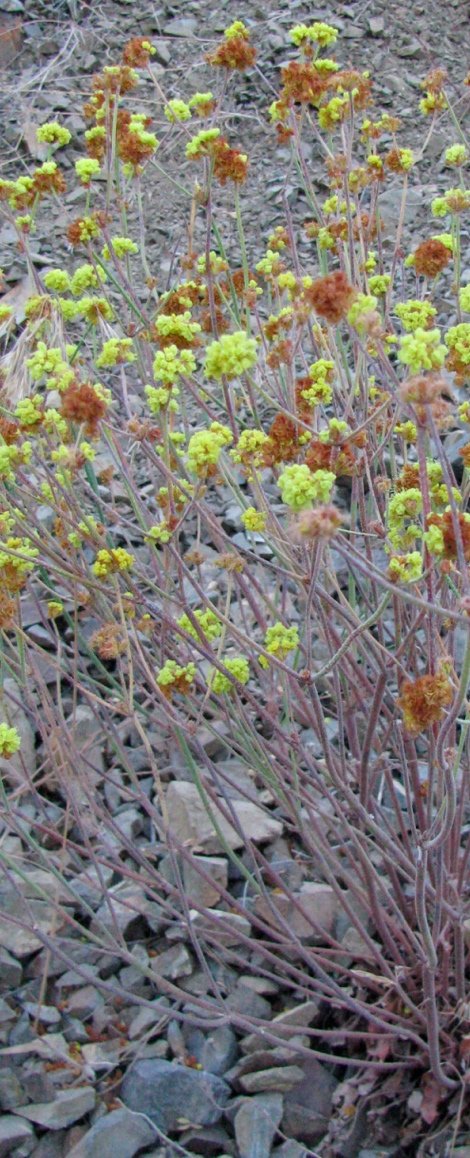
Here are the yellow blooms of what we are sure is some species of Eriogonum, which includes plants often known by some variation of the common name “Wild Buckwheat” (although they have nothing to do with the crop plant that provides buckwheat flour).

Eriogonum spp..jpg

The flowers were borne on leafless thick reddish stems.

Eriogonum spp. base of leafless bush.jpg

We tried to figure out which Eriogonum this was, but were having no success. Finally we came across this remark about another unidentified Buckwheat,

This plant has frustrated me for years — it is so very common here but I’ve yet to find a picture or a description in any of my layman’s field manuals. However, my favorite A Field Guide to the Plants of Arizona by Anne Orth Epple, did have this to say: almost all species of eriogonum are difficult to identify, even for the expert botanist. For the amateur, simply recognizing wild buckwheat as such is an accomplishment. So there! Epple says that there are 53 species of eriogonum in Arizona.

Okay, we’ll rest on our laurels of having tagged it as a Buckwheat! The author above goes on to say of her plant, “As the season wears on, the flowers gradually turn a brilliant rust color”, and that seems to be true of ours as well, perhaps another Eriogonum characteristic.

Eriogonum spp. bush.jpg

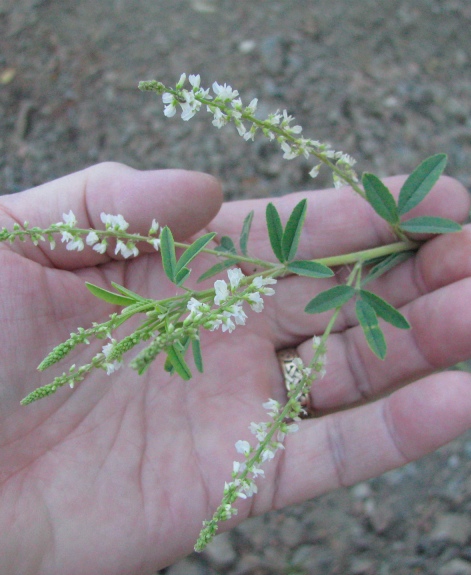
One final plant turned out to be another clover.

White sweet clover, Melilotus albus .jpg

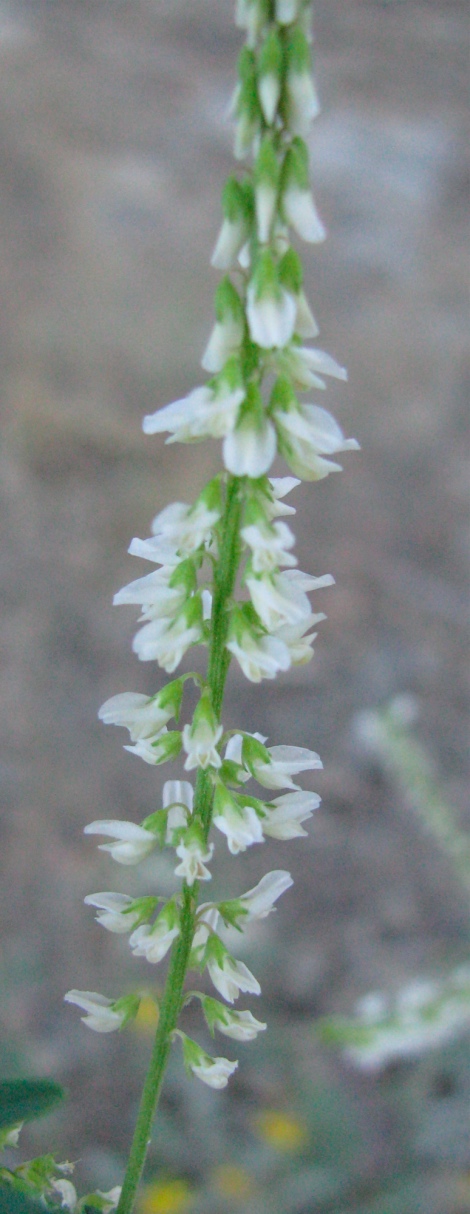
This is White Sweet Clover (Melilotus albus).

White sweet clover, Melilotus albus -closeup.jpg

Pretty and delicate looking, but another European introduction, for cattle forage, which has turned out to be invasive.

And by then Jack the mastiff thought it was time to call it quits, even though he’d been down to the river for a drink.

Jack thirsty, tongue lolling.jpg

He drank from his water dish back at the car, and then supervised while we drove home.

Siskiyou wildflower roundup

There are quite a few wildflowers we’ve photographed on our walks, and identified, that I haven’t had time to research and write about. Here are some, with just species, date seen, and brief comments. All are natives unless otherwise noted.

We are very much amateur botanizers and we don’t key out these plants, so our identifications are not authoritative and we welcome helpful comments from more experienced folks. Each species account in this post is followed with a link to a page about the species, on the Pacific Northwest Wildflower site of Mark Turner, who really is an expert. In fact he and Phyllis Gustafson “wrote the book”, Wildflowers of the Pacific Northwest (Timber Press Field Guide). If you have an interest in PNW wildflowers, or are a hiker/fisher/etc., you should go out and buy this book right now, preferably from your local independent bookstore. Knowing more about the flowers you see really adds to your enjoyment of the outdoors.

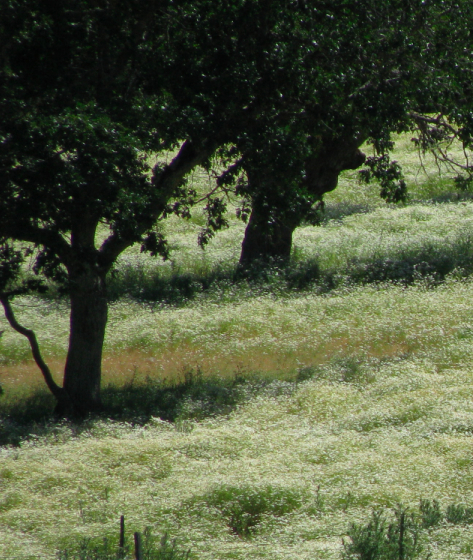
Daisies& Oaks.jpg

This pasture, not far from Applegate Lake, has been invaded with a daisy-type flower—all the white areas in the photo above.

Anthemis cotula.jpg

It’s probably Anthemis cotula, common name Stinking Mayweed. The leaves of this species have an unpleasant odor, but there was a slippery gravel slope down to the edge of the field, and we didn’t get close enough to confirm that. Next time.

It’s been introduced, and is a native of Eurasia. Find in Turner here. [photographed July 4, 2010]

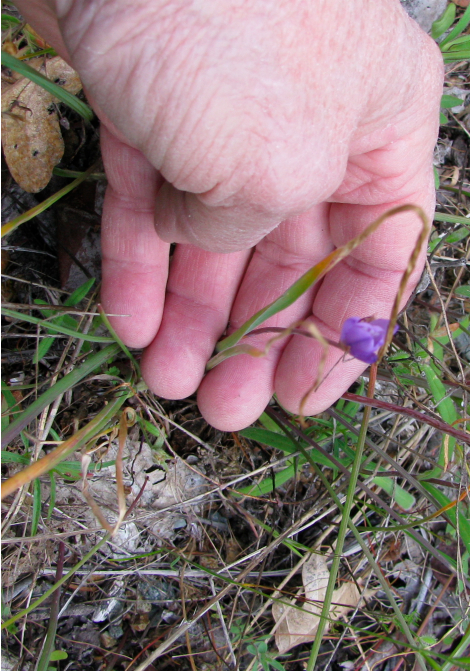
Blue dick closeup.jpg

Above is Dichelostemma capitatum, common names Common Brodiaea or Blue Dicks. This was taken back in on May 4, 2010, but I’ve seen others in bloom at higher elevation (around 2000 ft) even now.

Blue dick leaves.jpg

Height varies from 6 to 27 inches, and leaves are flat.

Blue dick flowers.jpg

Find in Turner here.
The plant below is a native shrub that also serves as an ornamental, and I saw it in bloom last week in Portland (OR). It’s found from British Columbia south through California, and also in Missouri and Tennessee. If we are to see it in our area it would be in sunny but wet spots.

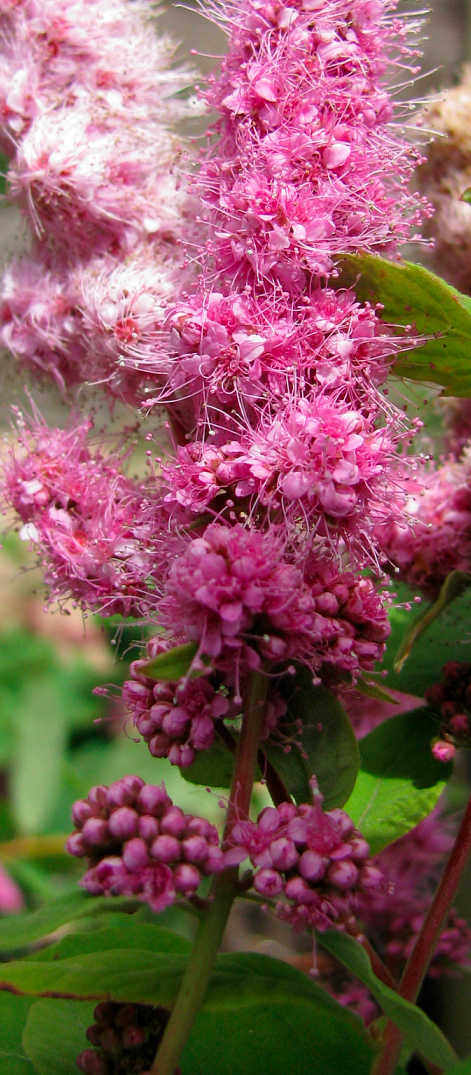
Spiraea douglasii full plant.jpg

This is Spiraea douglasii, common name Rose Spiraea or Hardhack.

Spiraea douglasii.jpg

I was unable to resist the temptation of investigating what “hardhack” means, but all I found was that the same common name is also applied to unrelated species, such as Potentilla fruticosa (back in 1885, here), Collinsonia canadensis, and Arrowwood Viburnum (Viburnum dentatum) as well as to other Spiraea spp. But this may be a clue: another common name for Spiraea douglasii is Ironwood, and Native Americans used the wood for mat-making needles, spoons, and spears. Photographed July 2, 2010 in Portland OR. Find in Turner here.
Below is Arnica cordifolia, common name Heartleaf Arnica.

Heartleaf Arnica, Arnica cordifolia .jpg

Photographed May 9, 2010. Find in Turner here.

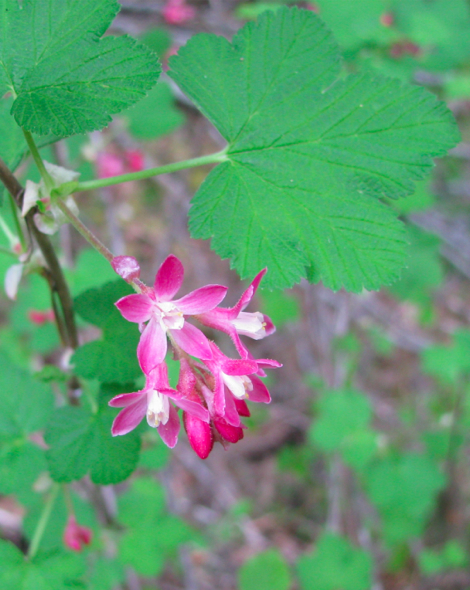
An earlier post showed Ribes roezlii, the Shiny-leaved Gooseberry. Below is Ribes sanguineum, Red-flowering Currant.

Ribes sanguineum.jpg

The genus Ribes includes currants and gooseberries. What’s the difference?

Gooseberries and currants, although closely related, can easily be identified by examining the canes and fruit color; gooseberry canes normally produce a spine at each leaf node and bear roughly grape-sized berries singly or in groups of 2 or 3, while currant canes lack spines or prickles and bear 8 to 30 smaller fruit in clusters. Figure 1. Cane and fruit of (A) Gooseberry and (B) Currant.

Currant-gooseberry drawing.jpg

Drawing and text from University of Minnesota Extension page.

Photographed May 6, 2010. Find in Turner here.

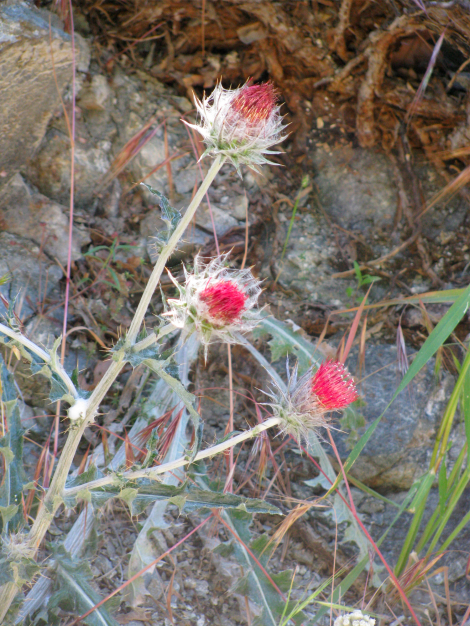
Next is one of the thistles, a plant group which people find hard to appreciate. But this one is unlikely to show up in your backyard or pasture, and perhaps that will make it easier. We think it is Cirsium occidentale, Snowy Thistle—Turner calls it uncommon—and it is growing in a dry rocky area next to a road. We’ve seen the plant re-appear there for perhaps a decade and its seed has only produced two other plants in that time.

Snowy thistle roadside.jpg

The plant blends in with the greyish stones, having greenish-grey leaves and also a heavy coat of hairs like spiderwebs. Another of its common names is Cobweb Thistle.

snowy thistle closeup.jpg

Perhaps the dramatic white pollen, seen below, is the origin of the “snowy” part of the common name.

Snowy thistle macro1.jpg

Photographed June 21, 2010. Find in Turner here.

Hydrophyllum fendleri, Fendler’s Waterleaf, is a moisture-loving plant with large leaves and fuzzy flower-heads.

Hydrophyllum fendleri Fendler's waterleaf - 1.jpg

It has a spreading habit and often grows where vegetation is lush, so that other plants cover it up.

Hydrophyllum fendleri COSEUP.jpg

Photographed on May 2, 2010. Find in Turner here.

Last, this small sedum.

Sedum stenopetalum whole plant.jpg

This is Sedum stenopetalum, Narrow-leaved Sedum. Flowers are yellow according to standard sources, but Turner shows white as well. Photographed end of June, 2010. (Yellow blossom in lower left, below, is clover.) Find in Turner here.

Sedum stenopetalum, Narrow-leaved Sedum.jpg

Botanical prints of threatened flora

For those of us who find beauty in plant forms, the botanical illustrations available online are an always-blooming visual pleasure. Here are two that came my way via a mention in today’s Botany Photo of the Day.

First, a gallery of members’ works on the site of the The American Society of Botanical Artists, well worth a visit. There are only a couple of examples for each artist, but you can follow links to websites for many of those represented.

Ceanothus_spinosus.jpg
Detail, Mountain lilac or Greenbark ceanothus (Ceanothus spinosus), watercolor © Chris Chapman. Source [this is a frames page, click on artist’s name in list at side].

Also, the ASBA has made available online nearly all of a touring exhibition called Losing Paradise? Endangered Plants Here and Around the World.The exhibit is at The New York Botanical Garden through July 25 2010, and at the Smithsonian’s National Museum of Natural History in DC, August 14th through December 10th.

This ASBA blog has about thirty of the 44 artworks featured in the exhibition (another is added every few days), and each is accompanied by the text from the exhibit catalog: a description of the plant and its situation, and commentary from the artist. (Elsewhere, the ASBA also plans to post all 125 pieces that were submitted for the exhibit, with shorter text; only about a dozen are up now.)

Here are a few samples from the blog. The images on the page are thumbnails, be sure to look at the much larger versions.

PaintedTrillium.jpg

Detail of Painted trillium (Trillium undulatum), mixed media, © Anne Marie Carney, US.

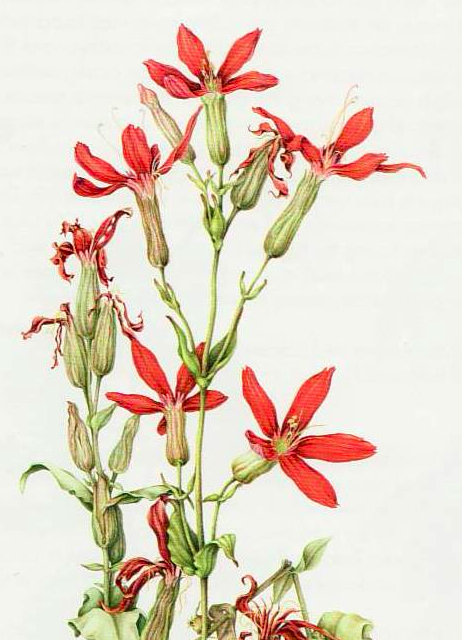
Silene_regia.jpg

Detail of Royal catchfly (Silene regia), watercolor © Heeyoung Kim, US.

A perennial wildflower of the US Midwest; its bright red flowers are pollinated by butterflies and hummingbirds.

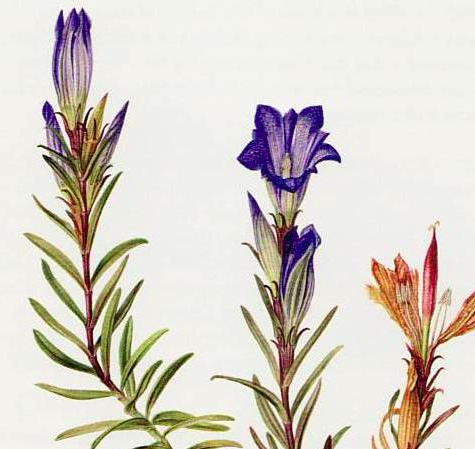
Marsh_gentian.jpg

Detail, Marsh gentian (Gentiana pneumonanthe), watercolor © Gillian Barlow, UK.

Marsh gentian is being studied all over northern Europe, mainly because of its fascinating relationship with the rare Alcon blue butterfly (Phengaris alcon). Adult Alcon blues lay their eggs on the outside of marsh gentian flowers, and when the larvae hatch, they emerge inside, where they begin to feed on the flower. After molting 3 times, these caterpillars chew through to the outside of the flower, then lower themselves to the ground on a “silken thread”. The caterpillar awaits the arrival of a Myrmica ant, which adopts it and carries it back to the ant’s nest. There it is fed by the ant colony through the fall and winter, growing quite large. In spring it forms a chrysalis, then emerges and exits the colony as quickly as it can to avoid being killed by the ants.

Actually, it’s even odder than that…

The larvae emit surface chemicals (allomones) that closely match those of ant larvae, causing the ants to carry the Alcon larvae into their nests and place them in their brood chambers, where they are fed by worker ants and where they devour ant larvae.

When the Alcon larva is fully developed it pupates. Once the adult hatches it must run the gauntlet of escaping. The ants recognise the butterfly to be an intruder, but when they go to attack it with their jaws they can’t grab anything substantial as the newly emerged adult butterfly is thickly clothed in loosely attached scales.

Over time, some ant colonies that are parasitized in this manner will slightly change their larva chemicals as a defense, leading to an evolutionary “arms race” between the two species.

The Phengaris alcon larvae are sought underground by the Ichneumon eumerus wasp. On detecting a P. alcon larva the wasp enters the nest and sprays a pheromone that causes the ants to attack each other. In the resulting confusion the wasp locates the butterfly larva and injects it with its eggs. On pupation, the wasp eggs hatch and consume the chrysalis from the inside. [Wikipedia]

Phengaris_alcon.jpg

Alcon blue butterfly (Phengaris alcon). Source.

Since the butterfly lays its eggs right on the flower, it may be serving the gentian as a pollinator, if it visits more than one plant.

Below, the Santa Cruz Cypress.

Santa_Cruz_Cypress.jpg

The endangered Santa Cruz Cypress, Cupressus abramsiana, is found only in the coastal Santa Cruz Mountains of central California, where it grows in gravelly, sandy soils above the fog belt, with chaparral and other evergreen species. This tree, once abundant, succumbed over the years to vineyard and home development, and road building. Only five populations totaling a few thousand individuals remain, all within a 15-mile stretch of the coast. It was Federally listed in 1987. It is still threatened by competition with non-native plants such as pampas grass and French broom, insect infestation and hybridization with other cypress species.

Visit the ASBA blogspot to see the rest of 30 or so. The catalog of the exhibit, from which these texts are excerpted, is on sale for $29.95 + s & h.