
We found this caterpillar on a ground peony in our garden this morning.

It is the larval form of the Douglas Fir Tussock Moth, Orgyia pseudotsugata. They are, like most caterpillars, voracious eaters and can have a devastating effect on Doug fir forests. Spraying, of pesticides or pheromones such as microbial insecticide Bacillus thuringiensis, and insect growth regulators, is often used against tussock moth infestations. Human activities, such as monoculture forest plantations, suppression of forest fires, and elimination of potential predators, have encouraged tussock moth proliferation.
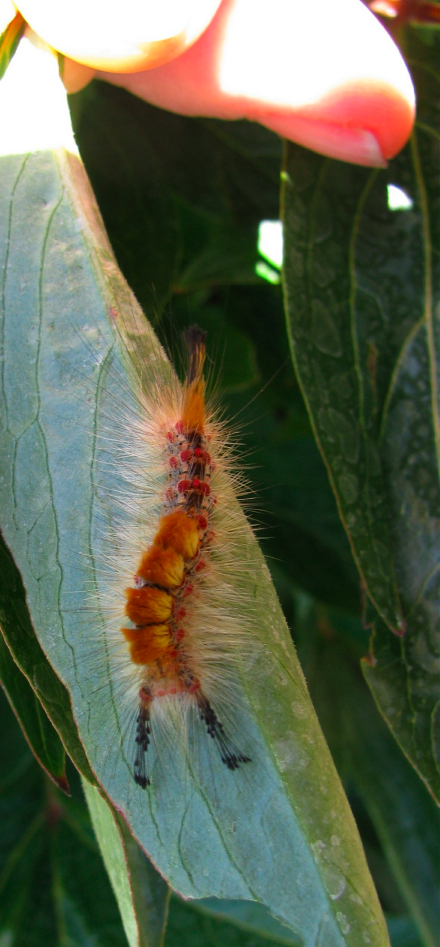
We were able to make a pretty firm identification of the caterpillar thanks to a terrific book, Lepidoptera of the Pacific Northwest: Caterpillars and Adults, by Jeffrey C. Miller and Paul Hammond. [Forest Health Enterprise. H.J. Andrews Publication Number 3739. December 2003. The authors work at Oregon State University in Corvallis.] Each page has a good photo of the caterpillar and adult forms of one species, with descriptions of appearance and ecology, such as what plants they are likely to be found on. Great book! Your tax dollars at work!
You can view or download the book as sections in pdf form. This moth is on page 175 of this pdf section. The book, an oversize paperback, is published by the USDA Forest Service, and was available several years ago (& still may be), free or very cheap, from
Richard C. Reardon rreardon@fs.fed.us
USDA Forest Service
180 Canfield St.
Morgantown WV 26505
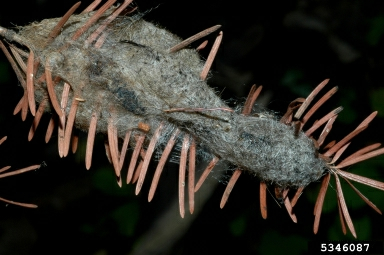
Here’s a photo of the cocoon form, woven around dead Doug fir needles. [Photo by William M. Ciesla, Forest Health Management International] Lots more information and photos of Orgyia pseudotsugata here and here.
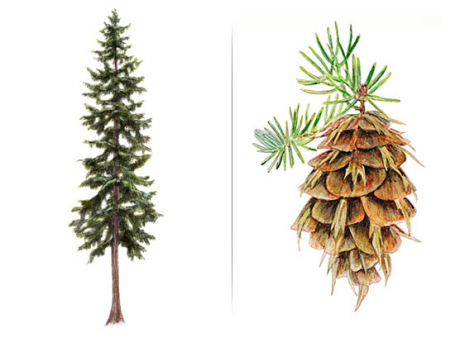
The Douglas Fir (Pseudotsuga menziesii) is an extremely common forest species in the West, a primary source of lumber, and is the state tree of Oregon. Notice the distinctive cone. [Image from Encarta.]
 nosleepingdogs