
Rumor has wings, Truth doesn’t

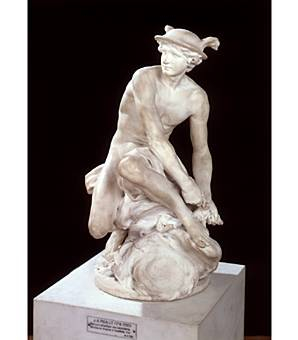
A lie travels round the world (with winged sandals) while truth is putting on her boots.
PigalleEncarta.jpg

And that proverb dates from before radio, television, or the internet!

This is a topic getting a lot of discussion lately with reference to Obama’s campaign (see Doonesbury) but lately I’ve had local instances.

I’m on a couple of local e-lists where a single person forwards items of interest to the area. One’s pretty much limited to prevention of wildfires & news about nearby fires; the other is more freeform, and occasionally includes forwarded emails of the sort that spread across the net like wildfires.
One of those caught my eye last week. It had to do with the Bakken formation oil deposit in Montana and North Dakota, and the gist of it was that the formation contains 503 billion barrels of oil which we shouldn’t let anyone prevent us (as Clinton allegedly did, in the 90’s) from extracting right away to solve our high gas prices.

For the net-savvy and many others, I think the subject line should have been a clue: “Where is the oil? Take time to read this one!!!!!!!!!!!!!” Another clue was that various specific numbers were given, references were made to government reports–even described as being online, yet there were no links to see the originals. Not even any complete footnote-type citations. In an apparent gesture of bona fides, the author said he/she had googled this information and invited the reader to “(GOOGLE it.) I did, and again, this BLEW my mind.”

Photo: Hermes/Mercury lacing up his winged sandals. For this discussion, he represents Rumor–he was both the fleet messenger of the gods and a thief and maker of mischief. Sculpture by Jean-Baptiste Pigalle, 1744. Photo from Encarta.

In well under five minutes I’d established to my satisfaction that this was one lie after another. Wikipedia and Google both helped me find out that the Bakken formation is a shale-oil formation which does contain a lot of oil. But the amount of “technically recoverable” oil, in the latest report [3 to 4.3 Billion Barrels of Technically Recoverable Oil Assessed in North Dakota and Montana’s Bakken Formation—25 Times More Than 1995 Estimate. U.S. Geological Survey (April 10, 2008)], is less than 1% of the 503 billion barrels hysterically described in the email. To put this in perspective, the US in 2007 imported 3.6 billion barrels of crude oil according to the US Energy Information Administration.

In addition, recovering oil from oil shale requires temperatures of at least 1000° F. and/or solvents, and is much more damaging to the environment than good old oil wells. Not to mention greenhouse gases from mining, extraction, and use.

oilShaleDOE.jpg

Squeezing oil from stone is not an easy proposition. Photo of oil shale from US Dept. of Energy.

I put all this into an email reply to the list-person, beginning with a sincere thanks

I really appreciate your local emails and the time you take to provide them.

But for non-local stuff, the email-o-sphere is just full of sensationalist misinformation. Some of it is “disinformation,” deliberately scattered to serve some political agenda. Please take time to check emails before forwarding them. If you check online you’ll find that…

Then I suggested that he might forward my email to the list, giving him permission to do so over my name as long as the entire thing, which wasn’t too long, was included.

The reply I got back was brief: “Thanks for the information.” In the week since then, nothing has appeared on the list about his previous forwarded post, nothing even suggesting there might be another point of view.

In rural areas such as ours there’s already heavy distrust of the government, so I figure the appeal of the false information will be strong. Politicians who deny that

a recent technological breakthrough has opened up the Bakken’s massive reserves… and we now have access of up to 500 billion barrels. And because this is light, sweet oil, those billions of barrels will cost Americans just $16 PER BARREL! That’s enough crude to fully fuel the American economy for “41 years straight”.

are going to be condemned as part of a conspiracy to rob the American people through high oil prices. Of course there may well be such a conspiracy, but it probably has more to do with the Iraq War and Cheney’s closed-door energy-policy meetings that he is trying to keep secret from Congress. See, I can be a conspiracy theorist too, and frequently I am! But I do like to have a little factual basis for my paranoid fantasies. Like these news stories about no-bid oil contracts being granted by the Iraqi government to US companies like Exxon Mobil and Chevron. These contracts are short-term but are widely expected to give an advantage, to those who receive them, in planned later bidding. With oil prices like these, the Iraqis are giving no-bid no-auction contracts? Oddly, an article from al-Jazeera doesn’t jump on the bandwagon of condemning the US, but quotes Iraqi officials as saying that companies in other smaller countries will also participate (how much? token participation?) and that the big American companies want a share of the profits, not just a fixed fee, which may be a deal-breaker for the Iraqis. (Brief general background here.) Anyway, that can be my conspiracy for today.

Can elephants really paint?

I found a link somewhere to a YouTube video of a young Asian elephant painting quite a good outline picture showing an elephant holding a flower in its trunk. It is impressive to see, but I found it hard to believe the implication: that this elephant was creating, rather than performing a learned task. As a former zookeeper and continuing student of animal intelligence I’m well aware of how various animal species can display amazing “intelligence” and problem-solving skills. And I’m equally aware of how we can misinterpret the actions of animals: we are blind to demonstrations of the real “intelligence” that animals use in their lives, but seize upon actions that remind us of ourselves.

We must keep in mind that we are the ones defining “intelligence”: it’s very specific to human concerns, sometimes even cultural distinctions and values. We don’t even count as intelligence the mental activity displayed, say, by a social hunter like a wolf or lioness who uses its knowledge of prey behavior, local topography, and the expected reactions of its hunting partners, to set up successful hunts of prey which may be much larger, faster, and part of a distracting herd. What we like to see, what we (naturally) respond to, are actions that mimic our own activities. To impress us, the mimicry must even be culturally appropriate. If I try to teach my dog to sing and he makes sounds like a Tuvan throat-singer I probably won’t think the venture a success, but if he sounds like Caruso or Elvis, that’s a different matter.

Also, animals can appear to perform complicated volitional acts which may be done simply by rote or mimicry. You may teach a dog to perform an operatic aria, or to mimic you when you dance, but the meaning invested in the act, and the amount of creativity or self-expression involved may not be at all what you (would like to) believe it is. A few animals have become famous for applying their acute powers of observation of human gesture, stance and expression; their masters guided them without being at all aware of having done so. Clever Hans, the horse who solved arithmetic problems and tapped out the answers with his hoof, is the pre-eminent example; when his guileless owner was blocked off from view of the horse, or did not know the answer himself, then Hans could hear the questions but was completely unable to tap out any correct responses. It appears that the horse read his owner’s body language, not that the man intentionally cued him. If the owner knew that 9 hoof-taps was the answer to “What is 3 times 3?” then his body relaxed after the ninth tap and the horse reacted to that.

So when we think we see an animal performing a complex activity (such as painting representational pictures), and one which has no apparent functional place in its normal life, we need to set aside our amazement and delight and look deeper.

It appears that the elephant video was made in an elephant camp in Thailand, perhaps at ChengMai where elephants have been trained in drawing and painting for over a decade, or at a newer camp called Mateman Elephant Camp. At Chengmai, the paintings are sold or exchanged for donations which help support the elephant center. The use of elephants in Asian logging is declining, and of course truly wild habitat where elephants won’t come into conflict with humans is scarce or nonexistent there. So the financial return from tourists is probably a positive thing, and painting may provide some stimulating activity for the elephants themselves although their greatest natural need is for more active pursuits such as walking many miles daily, uprooting bushes and trees, searching for water, learning and remembering their territory, and so on.

The photo below, from a 1995 issue of the Chengmai Mail, shows elephants in front of their largest painting to that time, a 12m mural made to raise money for a children’s fund.

elephantpaintingschool.jpg

But what is the elephant in the video actually doing? How much direction might the elephant be getting from his keeper or mahout? The video’s close focus on the animal did not offer any view of the mahout, who might have been giving verbal cues or making gestures.

Is the elephant painting a picture which it has composed and chosen or one which it is copying or has learned? A clue to this does appear in the video: near the end after the elephant has painted the red flower, the camera draws back and we can see an attendant removing a finished painting of very similar flowers from an easel near the elephant. To me, this indicates the likelihood of rote performance. The trainer has schooled the elephant: he hands the elephant a brush with red paint on it and says “Flower now,” while someone holds up a board with flower paintings on it, and the elephant responds. Even that act shows “intelligence,” and certainly trainability, but it would not demonstrate that the elephant is making the multiple choices, conscious and subconscious, made by a human artist.

There weren’t any videos I could find of elephants just learning to paint at ChengMai, but those in US zoos who’ve been given paintbrushes have consistently turned out paintings that can definitely be called “non-representational.”

The fullest account I found of the training of the elephants to paint was at the blog Stranger in a Strange Land in the March 14, 2008 post. It indicates pretty intensive training of the elephants.

“Teaching an elephant to paint is like teaching a young child,” says Tossapol Petcharattanakool, an art instructor at Maesa and professionally trained as an elementary school art teacher. “They have a sense of form and style and can learn positioning of lines. But while the elephant IS the painter, there is definitely communication, collaboration between mahout and elephant.”

In addition, at a site that sells the elephants’ paintings, I found indications that individual elephants repeat the same work.

There’s a photo of an “elephant with flowers” painting very much like the one made on the video, but with two flowers instead of one, and underneath,

Product Information

This is the last “Self Portrait” in stock – our allotment for May/June from Elephant Artist Hong.

Thanks to Anchalee Kalmapijit, director of the Mateman Elephant Camp and now director of an new Elephant Art enclave, we were able to obtain several of these Elephant Self Portraits made famous first by the documentary made by Blink TV with Vanda Harvey – an English Artist which was featured on the BBC and then the video posted on YouTube.

According to Anchalee, now is the rainy season in northern Thailand which makes it difficult for the Elephant Artists to paint in the open. Couple that with the decision by Anchalee and Hong’s handler Noi to “relax” and paint at a pace more set by Hong’s “mood”, and one can understand the scarcity of these paintings in the elephant art market. These paintings have sold as fast as we post them so order NOW! There is NO video with this painting.

PS Check out other sites that carry self portraits by Hong – they sell for a lot more than this!

That gives me enough evidence to conclude, until I learn differently, that the elephants are “merely” reproducing movements they have been taught. The degree of consistency is so great (in these few examples I’ve seen) that the trainers may even guide the animal’s trunk in the beginning, to teach it the desired lines and curves. Later the trainer gives verbal commands indicating which set of lines to draw. The elephants are not, say, looking over at another elephant and drawing lines with a brush to depict what they see.

The more we learn about natural animal behavior the richer and more complex we see that it is. If elephants or chimpanzees are unable to paint original representational pictures, that does not diminish them. The delight we feel when animals act like people is deeply selfish: “Look, it can hold a bat and hit a ball with it!” It’s imitating a human, that pinnacle of creation! Homage to humanity from the lesser beings.

Much more interesting are the things they can do that arise from their “essence,” their way of interacting with the world. But few of us ever get to observe at length any animals that are not living in a human-designed world; our pets, our livestock, our zoo animals, all act within the limits of a man-made environment. Even in that environment we can get glimpses of essence, of dog-ness or penguin-ness, if we pay attention and are resistant to self-serving interpretations.

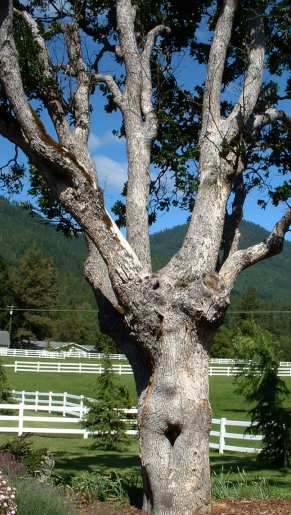
A local dryad

dryad.jpg

When I first saw this I understood better where the ancient Greeks got their vision of women turned into trees! Standing alone it is perhaps merely a curiosity, especially with the recently added white fencing, bark dust, and ornamentals (I’m sorry I never photographed it before those distractions/desecrations). But encountered suddenly in the forest, perhaps in dim light–that would be something quite different.

Keeping deer out of the garden

Deer love tender new leaves and can leap tall fences at a bound. We see them all the time, on our rural property outside the fenced area where the dogs have free range. But we’ve never had one get into our vegetable garden which is bordered on the back by that main fence, and on the other three sides by fences to keep our dogs out. The fences are well under five feet tall, nothing for a deer to jump. Our garden is in raised beds about three feet wide and varying in length; between the wooden sides of the beds, the walkways are about two and a half feet wide. My theory is, that deer (like other hoofed animals) are concerned about having good footing when they jump into a place, and the narrow spaces and mixture of heights doesn’t look safe or inviting.

Outside our fence I have been trying for over eight years to get trees and tall plants established in a bare spot to make a visual barrier between us and our neighbor’s two-story place. Poor soil and hot dry weather have been the major problem, but then the deer have chowed down on most everything that I have kept alive except some weeping willows I started by sticking branches in the ground. I’ve tried old remedies, new remedies, and wacky ideas: Mylar pinwheels, hanging scented soap, rotten egg spray, flapping hanging things tied to the trees, systemic bittering agents put in the soil, glittery hanging things like metallic beads, Mylar streamers, and aluminum pie plates (reputed to work to repel birds eating ripening fruit). Never did try hanging little bags of human hair trimmings, a method with a following. I bought dehydrated coyote urine but then on the drive home thought about how it must have been collected, and went back and returned it with an explanation to the wild bird store, and I believe they stopped carrying it. It might have worked, but the confinement needed to produce it was unacceptable.

I went so far as to lay down landscape cloth around the trees and then on top of that peg down that plastic-netting fencing used for temporary barriers. I put it down horizontally: it did a good job of tripping me up all the time but the deer did not seem to be affected. And soon falling leaves covered it, weeds rooted in the decomposed leaves, and it was buried.

Finally I decided to mimic what worked in the garden and I used wide plastic tape, like crime scene tape or the fiberglass tape used on drywall seams, to divide the tree area into many narrow portions. It worked! I put it at varying heights between 2 – 4 feet, going around a tree trunk or stake and then off at an angle to another point. I’ve now moved to using bright yellow polypropylene rope because the tapes didn’t hold up to uv exposure, and the stronger rope is easier for me to get over or under when working out there. Once the trees get tall enough, it can be removed; without some protection, nothing but the original willows will ever get that tall. It’s not too scenic, but I don’t care, and the neighbors–I think they probably prefer it to the flapping plastic trash bags!