Siskiyou wildflowers: Washington Lily

Washington lilies buds.jpg

For two months we have been watching these lily plants, waiting for them to bloom. It took several days of sun and 80 degrees or so to coax them into revealing their flowers.

Washington Lily 5Dan.jpg

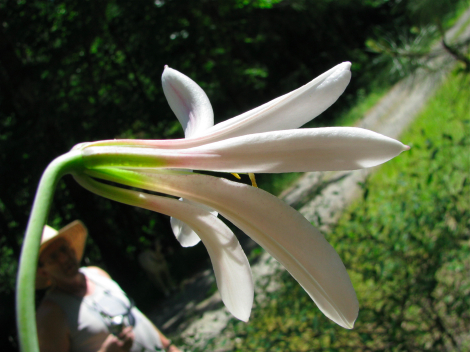
These are Washington lilies, Lilium washingtonium. The flowers are white, sometimes pinkish, with tiny pink or purple dots inside.

Washington lily 3.jpg

Despite the name, these are not found in Washington state, but only in Oregon and California. The plant was first described in 1859 by Albert Kellogg, who went against the usual practice of botanists and used the local settlers’ name, Lady Washington Lily, as basis for the scientific name. Presumably the settlers were referring to Martha Washington.

Turner calls them “uncommon”, and these are the only ones we have seen in our area. There are four plants within a six foot radius. One has had its top foot or so nipped off by some browsing animal, and one has not formed buds—too young perhaps.

Washington lily 2.jpg

Uncommonly beautiful they certainly are. And they bear a sweet fragrance.

Washington lily 4.jpg

Siskiyou wild plants: horsetail, chokecherry and yarrow, and a detour into the Iliad

Today I’ll start with a genus of plants that is a bit different: it’s a “living fossil” from the Devonian (405 million to 345 million years ago, age of fishes and appearance of amphibians) when some specimens topped 90 feet (30 meters), it does not flower, and it’s found on every continent except Australia and Antarctica. And, people both cook it and use it to scour pots. This is the genus Equisetum, commonly called horsetail. It’s a lover of wet places and we found it at the edge of a creek.
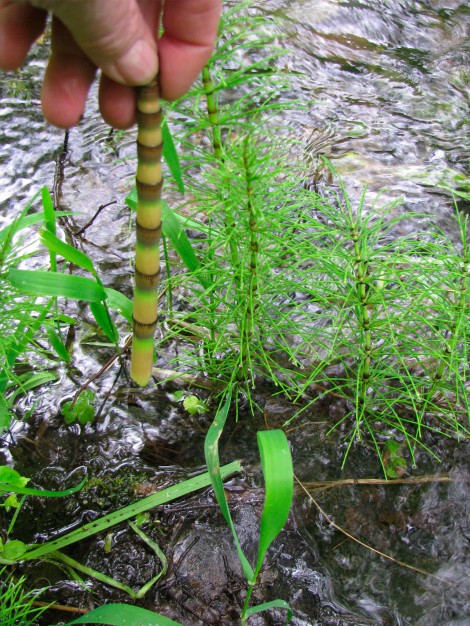
Equisetum 2stages.jpg

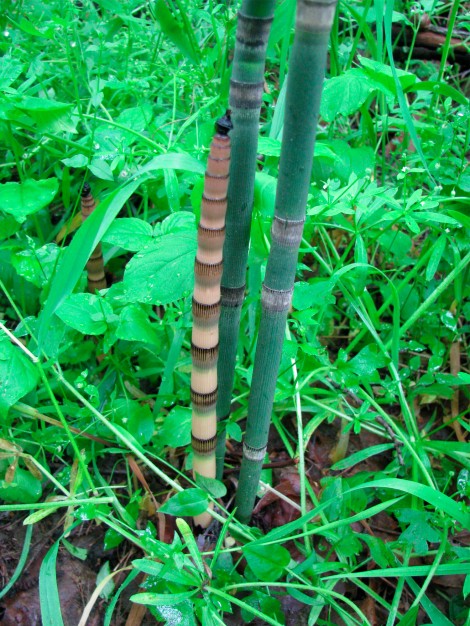
Above are both stages of growth side by side: the jointed stem somewhat like bamboo, which I plucked from a slope next to the creek, and a smaller stem that has already “leafed out” in radial whorls of needle-like leaves. This picture from Wikipedia shows the leaf whorls well.
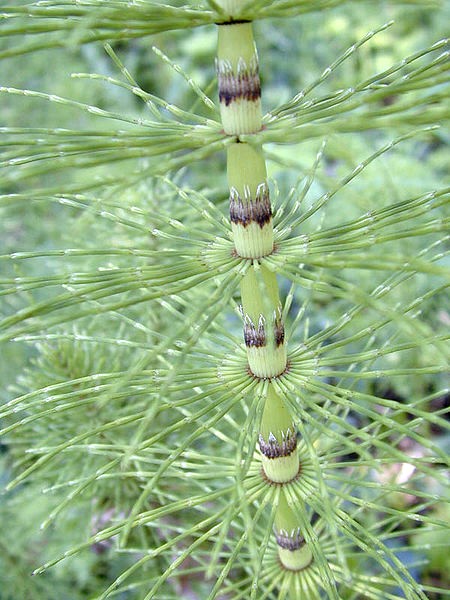
EquisetumWhorls.jpg

The unleafed stems were beautifully colored,
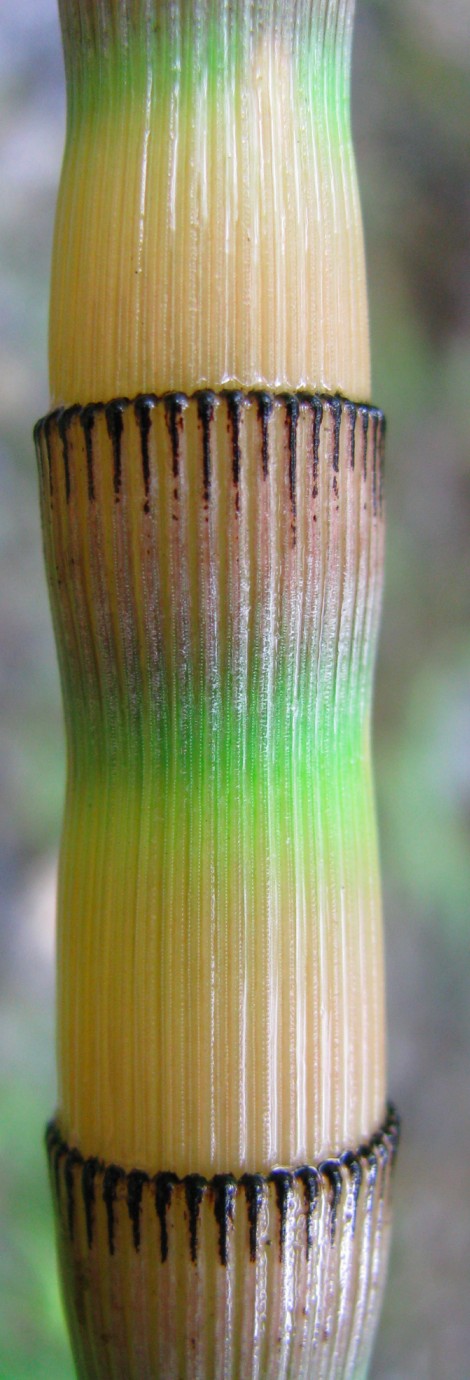
Equisetum StemCLOSE.jpg

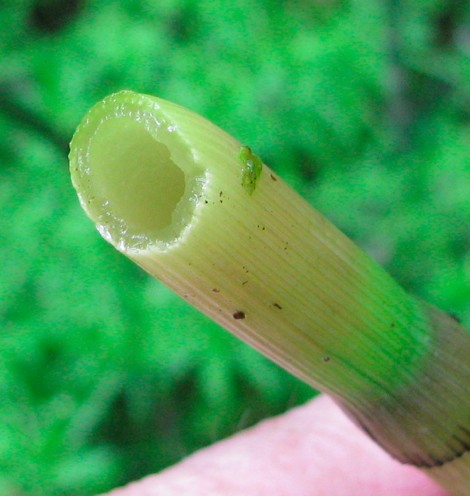
and hollow.

Equisetum Hollow.jpg

The stems are said to be “anatomically […] unique among plants”.
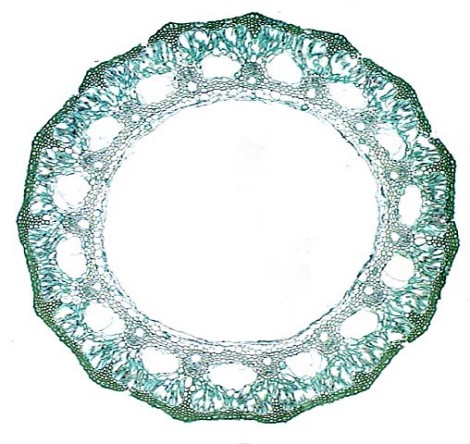
Equisetum stem cross-section.jpg

This beautiful microphotograph is of a stained cross-section of stem.

Equisetum species grow from underground rhizomes that are extremely persistent and invasive; think twice before deciding it is the perfect plant for that boggy spot in your yard, because it is likely to be there (and maybe other places too) forever. They’ve been used for all sorts of purposes through history. Many a camper and wildland dweller has scoured pots with the stems, which have a lot of silica in them, and they are “still boiled and then dried in Japan, to be used for the final polishing process on woodcraft to produce a smoother finish than any sandpaper.” The leaves are used as a dye for a soft green color. The young shoots are eaten but require special treatment because they contain the enzyme thiaminase[172], a substance that can rob the body of the vitamin B complex.
Equisetum strobilum forms.jpg

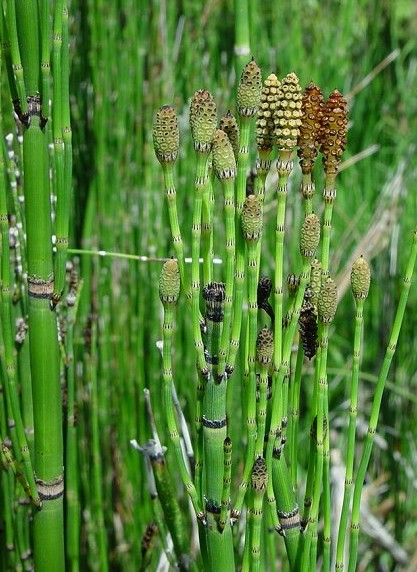
In addition to spreading locally via rhizomes, Equisetum produces spores on terminal cones, shown below.
EquisetumCones.jpg

Photo source.

There are several species found in Oregon, and I think the one we saw and photographed is Equisetum hyemale but I’m not sure. Equisetum, by the way, means “horse-bristle”, as in “scrub-brush”, and hyemale is from hiemis, “winter” (both terms from the Latin). Other common names include scouring rush, pipes (children play with them, as the hollow segments can be taken apart and put back together), and scrub grass.

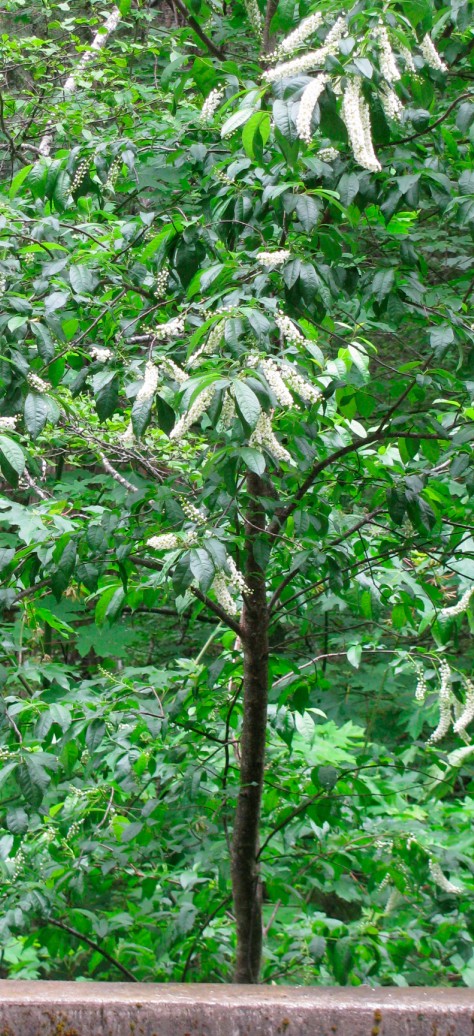
Downstream from the equisetum, back on the road, we saw next to the narrow concrete bridge a small tree growing in the water
Prunus virginianus tree.jpg

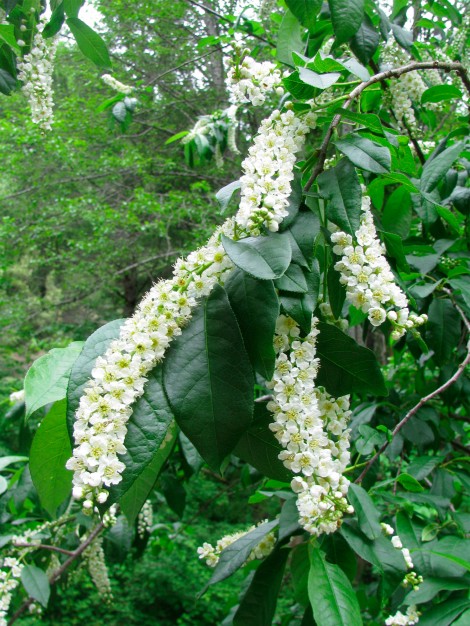
and laden with tresses of white blooms.
Prunus virginianus .jpg

This is choke cherry (Prunus virginiana), a species of “bird cherry”. Fruits are small and sour but very high in antioxidant pigment compounds, like anthocyanins. With a lot of added sugar, they are used to make wines, syrups, jellies, and jams.

Yarrow cultivars are familiar garden plants. Here is the ancestor of those, Achillea millefolium or common yarrow. It’s found throughout the Northern Hemisphere, even in the Himalayas.
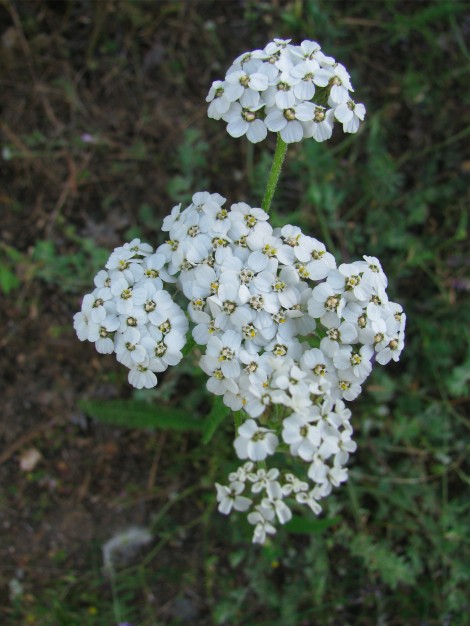
Achilleia millefolium flowers.jpg

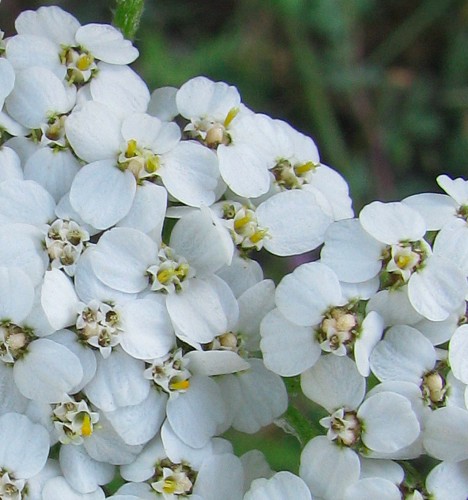
A closer view of the flowers.

Achillea millefolium flower detail.jpg

The leaves are distinctive, giving rise to the common name plumajillo, or “little feather” in Spanish-speaking New Mexico and southern Colorado, and to the millefolium (thousand-leaf) in its scientific name.

achillea millefolium leaf .jpg

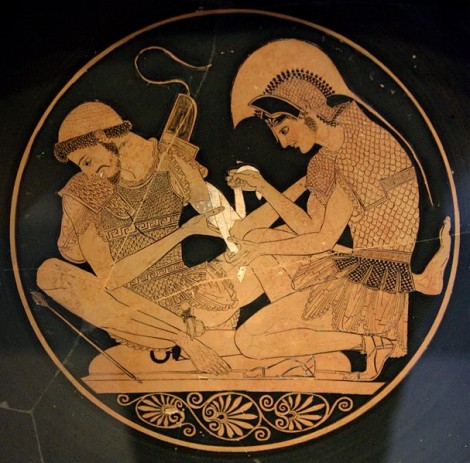
It’s called Achillea after Achilles, Homer’s hero in the Iliad, who was well-trained in healing wounds as well as in causing them. Yarrow has been used for thousands of years to staunch the flow of blood and for other medical purposes, and among its common names are “herbal militaris” or soldier’s herb, nosebleed plant, and soldier’s woundwort. But there doesn’t seem to be any peer-reviewed research into compounds in the plant that may have medicinal properties. One site I visited, planetbotanic.ca, promoted it as an immune stimulant to ward off colds. But then the site’s “fact sheet” also tells us that “Yarrow’s scientific name hints of a legendary use. Achilles’ famous heel is said to have been healed when yarrow was applied to it.” Other than the words “Achilles” and “heel”, everything in this sentence is wrong: Achilles’s mother held her infant by the heel while dipping him in the River Styx to confer invincibility upon him. The water did not touch that part of his body, and eventually the warrior who had survived many wounds was killed by an arrow to the heel, from the bow of Paris.
AchillesBinding Wound.jpg

Achilles bandaging the wounded Patroclus. From a Greek vase painting. Source.


Paris was not much of a fighter. He mostly stayed with the women and old men observing the ten years’ war from the heights of Troy’s great battlements, so it’s ironic that his blow (even if delivered from a distance) should kill the otherwise invincible champion of combat, Achilles.
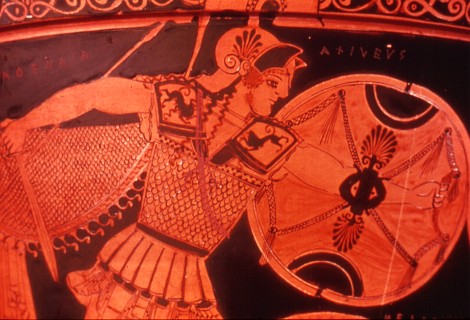
Achilles in battle.jpg

Achilles in battle. Source.

Homer doesn’t include the death of Achilles in the Iliad; he ends with a final consequence of Achilles’s wounded pride, fit of rage and refusal to fight, when his friend Patroclus goes out wearing the great warrior’s armor to drive back the attacking Trojans. Patroclus and the Greeks carried the day, indeed seemed about to breach the walls of Troy, but the god Apollo intervened, striking Patroclus so as to daze him, sending his borrowed helmet spinning in the dust; one Trojan wounded him from behind and then Hector, Prince of Troy, delivered the fatal blow. When word of this reached Achilles he put aside his pride under force of a greater rage, and went after Hector like a lioness whose cub’s been killed.

All is not the clashing of bronze and shedding of blood in the Iliad. This is a famously tender moment, famously sad as well, one that is familiar to too many soldier parents.

Astyanax, Hector.jpg

“And tall Hector nodded, his helmet flashing:
… shining Hector reached down for his son—but the boy recoiled,
… screaming out at the sight of his own father,
terrified by the flashing bronze, the horsehair crest,
the great ridge of the helmet nodding, bristling terror—
so it struck his eyes. And his loving father laughed,
his mother laughed as well, and glorious Hector,
quickly lifting the helmet from his head,
set it down on the ground, fiery in the sunlight,
and raising his son he kissed him, tossed him in his arms…”

Iliad Bk. 6: 556-56, in the very readable translation by Robert Fagles. Source.


The Iliad ends with Hector’s father King Priam of Troy humbly seeking his son’s body for burial. In his boundless desire for vengeance upon his friend’s killer, Achilles has been dragging the body behind his chariot, around and around the city. Yet when the old man, escorted through the enemy lines by a disguised Mercury, kneels before Achilles, kisses his hands, and implores his son’s killer to think of his own faraway father and give up Hector’s body, Achilles weeps with Priam, and relents.

All that was about 1250 BC, yet reading the Iliad we find characters and feelings that match those we can see around us still. The immense destructive power of rage and wounded pride are as great now as then. And the history of the humble yarrow also connects us to people like Achilles and Hector; their eyes saw these flowers, crushed these leaves to keep with them against the likelihood of wound from sword or spear.
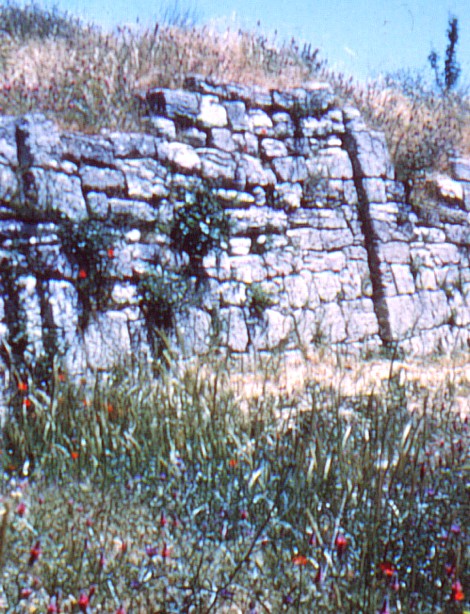
Walls of Troy.jpg

Troy, level VI, defensive walls, as excavated by Schliemann. This level is about a hundred years earlier than that believed to have been the city destroyed by war in the Iliad, about 1250 BC. Source.
Wild strawberries

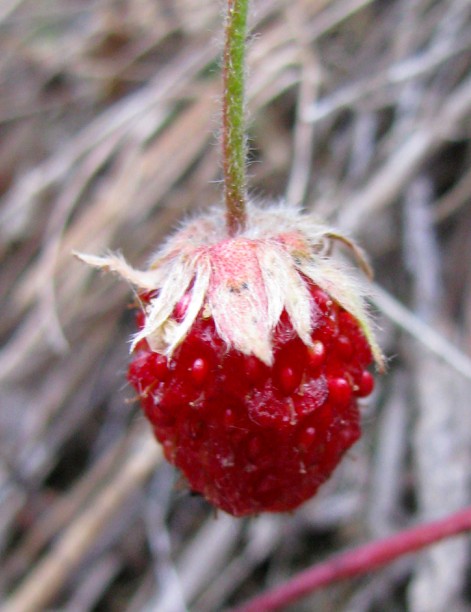
It’s been a cool wet spring here in the Siskiyous, but on June 9 we found wild strawberries with dead-ripe fruit.

WildStrawberryRipe.jpg

Irresistible! The fruits were tiny, maybe half an inch in diameter, and didn’t want to separate from the leaves so we each ate one leaves and all. Very juicy and red, sweet, but the intense strawberry flavor I expected to find wasn’t really there. Maybe it’s been enhanced by horticultural selection? Or I got one that wasn’t too tasty? I don’t think a store-sized berry could be so ripe as these were, without being a shapeless blob.

WildStrawberries GreenLeaf.jpg

As to species, this plant could be either the woodland strawberry (Fragia vesca) or the Virginia strawberry (F. virginiana). Both are found all across North America, and are hard to tell apart. In common parlance, the name “wild strawberry” is applied rather indiscriminately to these two species. A third bearing strawberry in North America is F. chiloensis, the beach strawberry, Chilean strawberry, or coastal strawberry, native to the Pacific Ocean coasts of North and South America, and also Hawaiʻi. Migratory birds are thought to have dispersed F. chiloensis from the Pacific coast of North America to the mountains of Hawaiʻi, Chile, and Argentina.

A hybrid of F. chiloensis (for size) and F. virginiana (for flavor) was first made in 1840 in France and this lineage replaced F. frascaand Musky strawberries (F. moschata) as the commonly cultivated strawberry. But people harvested them long before they cultivated them, and one source says that it was “probably during this time that they acquired the name strawberries from the practice of threading them on straws whilst harvesting them,

Strawberries on a straw.jpg

Photo source.

or possibly from the term ‘streabariye’ used by the Benedictine monk Aelfric in AD995 to describe the st[r]aying habit of the runners. Certainly the name strawberry was used long before the practice of placing straw around the fruiting plants became widespread.”

WildStrawberriesRedLeaf.jpg

Form and function: a columbine flower

Columbineabove.jpg

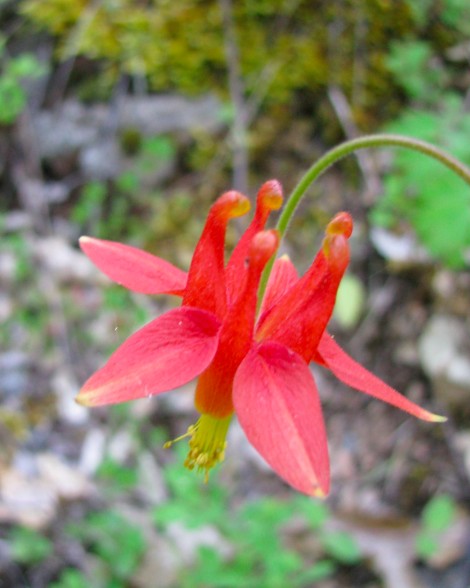
Like all columbines, the Western red columbine (Aquilegia formosa) above has a five-petalled flower with unusual “spurs” or tubules on the top. Each spur is formed by one of the five petals, curling into a cylinder as it rises.

Columbine.jpg

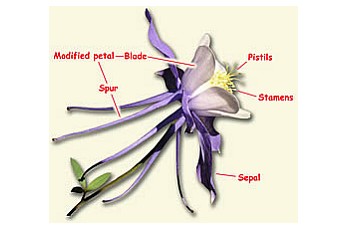
The lower ends of the petals join into a circle, within which are the yellow, pollen-bearing, stamens which extend beyond the petals. [Diagram below from USFS.]

URSDA diagram.jpg

The sepals (that wrap the immature flower) are not green as in most flowers but red, and extend out at right angles when the flower opens.

ColumbineBud.jpg

Western red columbine bud.

Flower design is all about getting pollen from the stamens to the pistils (female organs); form definitely follows function.What, then, has led to the development of these seemingly superfluous spurs? One clue is that they are of widely varying lengths. North American columbines range in spur length from from 7.5 to 123 mm (0.35 to 4.8 in.). And, because the first columbine—bearing a flower with short spurs— reached North America via the Bering Strait land bridge, between 10,000 and 40,000 years ago, all this change has taken place in a relatively short time, indicating some big payoff for the plant, in terms of survival or reproduction.

The columbine has both male and female parts in each flower, allowing for self-pollination, but that would not introduce any genetic variation. So the flower of the columbine is an elaborate package which has evolved to get effective pollination from its principal pollinators: bees, hummingbirds, and hawkmoths. And the spurs are an integral part of the process…

ColumbineSpur1.jpg

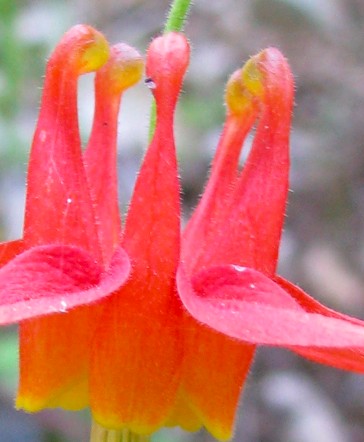
because the knob at the end of each spur contains nectar, and that is a big attraction to pollinators.

The flowers and pollinators have conflicting interests: the visitor just wants the nectar, as much as it can drink, while the flower wants to dole out the nectar bit by bit in order to keep attracting more insects (or other pollinators—bats, birds). One method is by placing the nectar at the end of a passage just barely long enough for the tongue of the pollinators. They can sip but not slurp, and while forcing their way in they make good contact with the pistils and stamens to pick up and deposit pollen.

Darwin was intrigued by an extreme example, a Malagasy orchid which puts its nectar at the end of a 30 cm (11.8 in.) tube, and he hypothesized that flowers and their pollinators evolved together gradually in this regard. The flowers raised the bar, so to speak, a little at a time by lengthening the reach for the nectar, and the pollinating insects gradually evolved longer and longer tongues. In columbines, there are some species with short spurs accessible to bees, others with longer spurs that are mainly pollinated by hummingbirds, and some with even longer spurs for the long-tongued hawkmoth.

beeTongue.jpg

Bee approaching flower, with tongue out. The long tan objects are pollen-bearing anthers, on the ends of the stamens. Photo.

hummingbirdTongue.jpg

Hummingbird tongue. Photo.

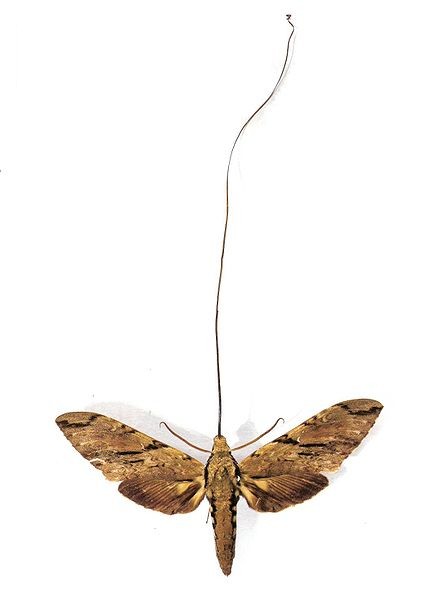
Hawkmoth 1.jpg

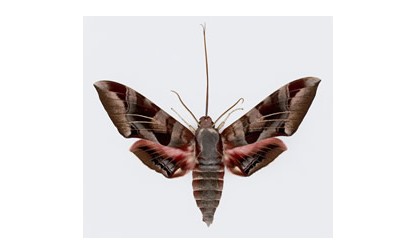
A giant hawk moth (Eumorpha typhon) adult with its tongue (proboscis) extended. Image by Alfred University artist Joseph Scheer.

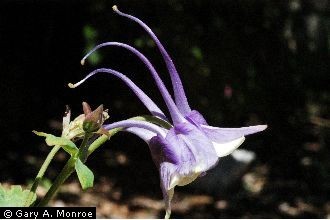
A. Longissima.jpg

Photo by Gary Monroe.

Above is the flower of Aquilegia longissima (the longspur columbine of the SW US), which has the longest spurs of any species of columbine. Compare to those on the previous photos of our Western red columbine. The Western red is pollinated primarily by hummingbirds, though it attracts other insects too including bees and butterflies.

In a complex genetic study of North American columbine species published in 2007 (1), Whittall and Hodges found evidence that the ancestral short-spurred columbines had been bee-pollinated, but as they moved south and encountered first hummingbirds, then hawkmoths, had undergone two relatively quick transitions of lengthening spurs to adapt to these new pollinators.When long-tongued pollinators get nectar from a short-spurred flower, they will not need to shoulder their way in, and so won’t contact the stamens and pistils as much. They won’t pick up, or deposit, as much pollen.

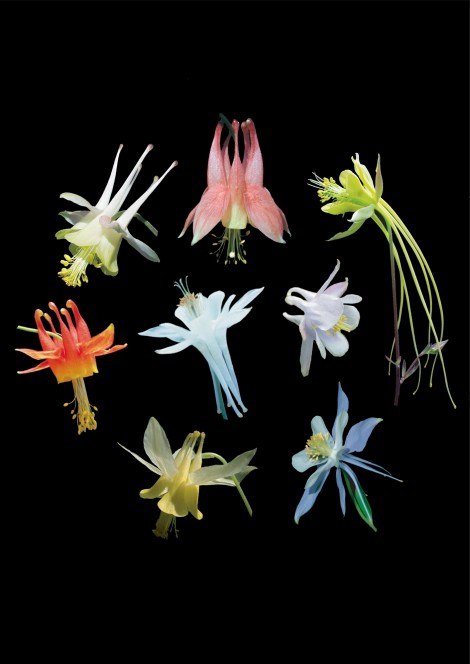
And this led to development of different species of columbine. Once flowers in a certain area have gotten longer spurs, so that they mostly depend on a new longer-tongued pollinator, flowers that attract that particular organism better will be more successfully pollinated and produce more seeds. This may mean a change in color, flower orientation (facing up or down), or changes in form. Hodges subsequently studied color preference in the pollinators of columbines:

”What is important in this research is that hawkmoths mostly visit— and pollinate — white or pale flowers,” said senior author Scott A. Hodges, professor of ecology, evolution and marine biology at UCSB. “We have shown experimentally that hawkmoths prefer these paler colors.” When a plant population shifts from being predominantly hummingbird-pollinated where flowers are red, to hawkmoth-pollinated, natural selection works to change the flower color to white or yellow, he explained. [full original article here(2)]

Hodges8flowers.jpg

Photo by SA Hodges, MA Hodges, D Inouye.

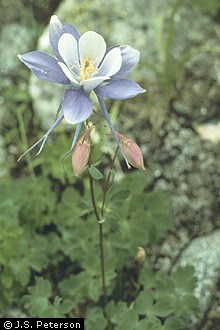
This can even be seen in varieties of the same species, as in the case of Aquilegia coerulea, the Colorado blue columbine. Each of the three below is, according to the USDA, the same variety: A. coerulea James.

BLueColumbine1.jpg

Photo from USDA.

BlueColumbine2.jpg

Photo from USDA.

BlueColumbine3.jpg

Photo from USDA.

Here’s the process by which the flowers get lighter in color, as the latitude changes.

Aquilegia coerulea (Colorado blue columbine) ranges in color from dark blue to pale blue to white. Aquilegia coerulea is the southern most (northern New Mexico) occurring dark blue flowered columbine and it occurs at high elevations where colder temperatures generally preclude hawk moths. As Aquilegia coerulea expanded out of the Rocky Mountains into lower elevations and warmer temperatures, the species developed into white or very pale blue varieties. This change to a lighter coloration co-evolved, as hawk moths were available as an alternative pollinator to bees and bumblebees. It is also interesting to note that the spurs on the dark blue Aquilegia coerulea are short, similar to the other dark blue, high elevation columbines whereas the spurs on the pale blue to white Aquilegia coerulea are longer. (USFS)

In this theoretically orderly process whereby bees are excluded from the nectar supplies of long-spurred flowers, it happens that the bees sometimes choose to solve the problem in a “cutting the Gordian knot” fashion, by making holes in the spurs to drink the nectar directly. Unlike a bee who blunders around in the flower and departs with no nectar, the spur-cutting bee contributes nothing to pollination. But bees require both nectar and pollen, and the columbine’s pistils and stamens are easy to reach; so the bee who stops for a quick cheating drink may look in for pollen another time, thus fulfilling the needs of the flower as well as her own. (In honeybees the workers are all females.)

So it seems that Darwin’s idea of a gradual process, with increases in spur length being answered by longer tongues on the pollinator species, is not correct for columbines at least. Based on genetic data, Whittall and Hodges hypothesize a start-and-stop process: the columbines moved into new areas, with new longer-tongued pollinators (e.g. hummingbirds) which could raid the nectar without touching the pollen, and so flowers with longer nectar spurs became more likely to be pollinated and set seed. Instead of the flowers leading the dance by lengthening the spurs, it was the presence of different pollinators that forced change.

But Darwin was proved right in his prediction that an insect would turn up, capable of pollinating the incredibly long-tubed orchid. It’s a hawkmoth called Xanthopan morgani, or Morgan’s Sphinx, and here is its picture.

Morgan's sphinx.jpg

Photo from Wikipedia.

More images of these remarkable moths: night-time photo of Arizona moth feeding on Jimsonweed, showing tongue curled up in the air; pictures of the rare British hummingbird hawk-moth, which can hover: A, B; and photos of the African convolvulus hawkmoth.

References

(1) 2007: Whittall Justen B; Hodges Scott A. Pollinator shifts drive increasingly long nectar spurs in columbine flowers. Nature 2007;447(7145):706-9.

(2) 2009: Hodges, Scott A.; Derieg, Nathan J. Adaptive radiations: From field to genomic studies. Proceedings of the National Academy of Sciences June 16, 2009; 106 (suppl. 1): 9947–9954.