There are quite a few alligator lizards around our place, and one of them left a shed skin for us to find last month. Our lizards are probably the Southern Alligator Lizard, (Elgaria multicarinata). (See here for range map and basic info.)

[photo © Gary Nafis, from the californiaherps site]
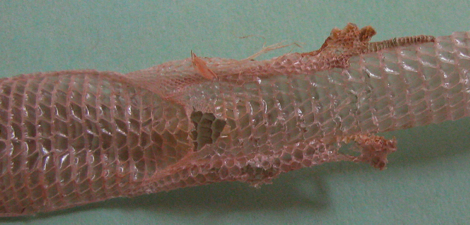
The skin is complete, although in two pieces (ventral or belly view below).

The larger scales of the head
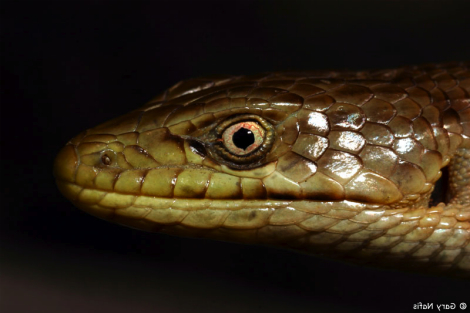
[photo © Gary Nafis, from the californiaherps site]
are clearly visible, or at least their clear covering is.

Also the legs, as they were arranged when the lizard wriggled and scraped its way out of the skin.

Here are the rear legs and vent.
And here’s a photo by Mark Leppin, in Northern Oregon, of the belly of a live alligator lizard:

The shed skin is turned inside out as the lizard peels it back over its head, by wriggling and scraping against whatever’s handy. Unlike most lizards, the alligator lizard sheds its skin in one piece (the one we found tore in handling), but it is like others in usually eating the shed. Depending on an individual’s health and rate of growth, it may shed every four to six weeks. Beforehand lizards and snakes may seek out water or damp places to help loosen the skin. The process is said to take only a few hours for those that shed in one piece.
Alligator lizards are insectivores but also take small eggs, snails, and probably anything else that they can find. The young are live-born, and we see them each summer––scarcely over an inch long, and very fast once they learn that everything bigger than they are regards them as lunch. The adults lose their tails once in a while, perhaps to snakes or other predators, and regrow them but the regenerated tails look stubby, not long and whiplike. Every dog we’ve had has tried to catch these creatures, without even coming close. My attempts to take pictures of them have all failed too, they’re just too wary and quick.
 nosleepingdogs