Back to the Fair

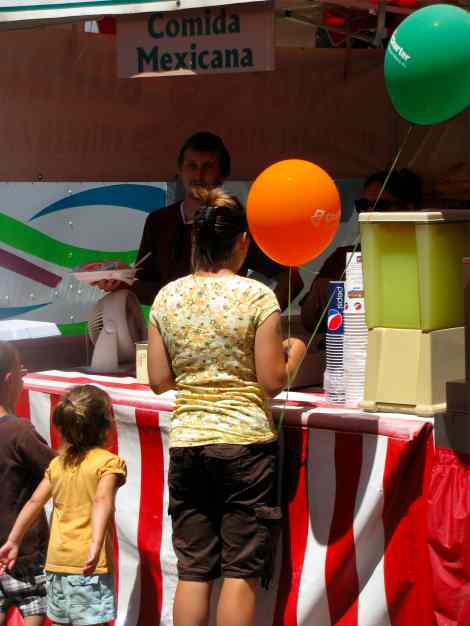
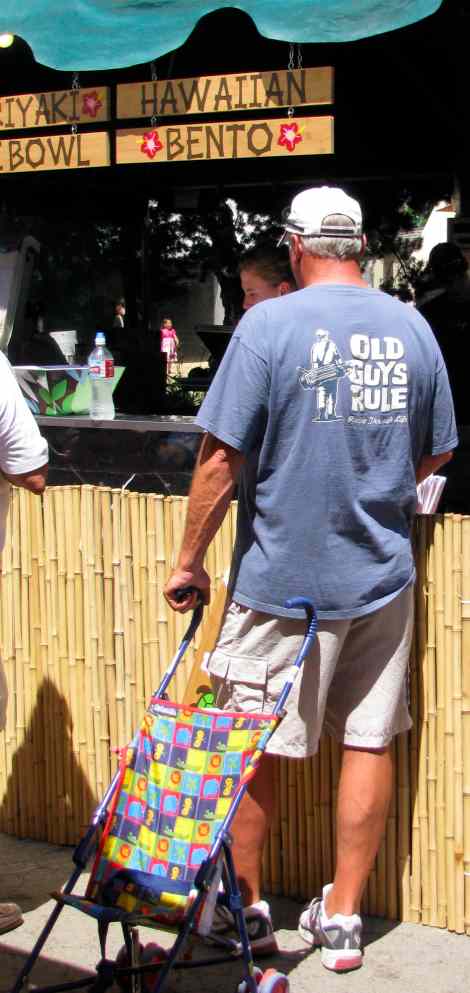
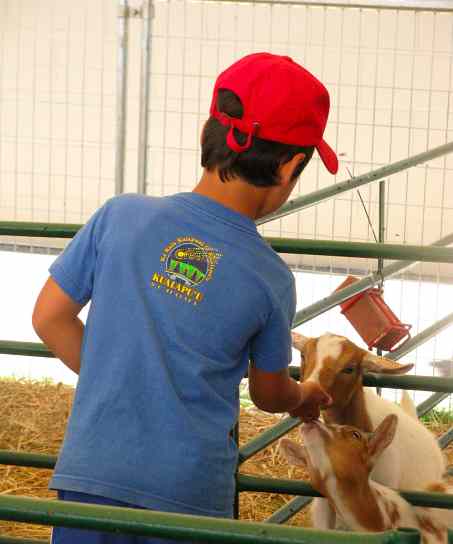
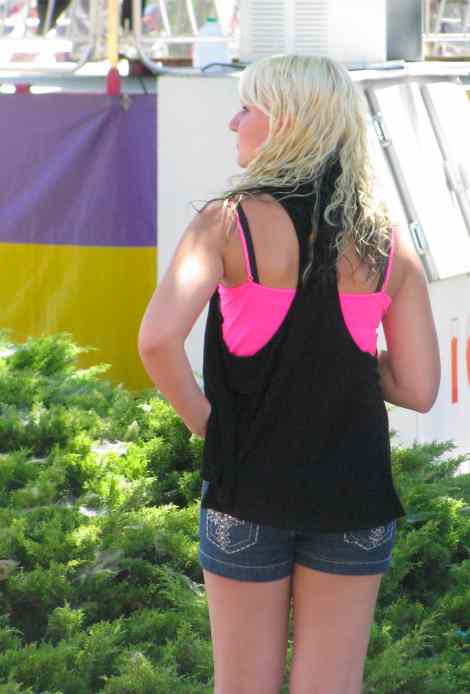
I posted photos earlier from our visit to the Jackson County Fair, and here’s a series that I took with the title “Back to the Fair” in mind. This isn’t a cross-section of folks at the fair by any means; for one thing, it was clear that America does have an obesity problem. But photographing people who are 100+ pounds overweight felt bad, insulting, so they’re not here.

Mothr,Child&Balloons.jpg

Boy&Goats.jpg

CoupleWithDinosaur.jpg

ManWithTattoos.jpg

MotherBabyFoodStand.jpg

Ram'sHead.jpg

FatherWithChildren.jpg

YoungWomanPink&Black.jpg

TieDye&GirlInBubble.jpg

Trailblazers 4-H2.jpg

BabyInHatOnHip.jpg

OlderMan.jpg

LittleGirlWithStripes.jpg

ManWithMilitaryBearing.jpg

The County Fair

DropZoneRide.jpg

We went to our county fair today, and were saddened at how it is shrinking. Even counting time spent eating elephant ears and bento, we were there less than three hours. Everything seems smaller in numbers of exhibits, and generally drained of vitality. It takes a lot of people, many of them unpaid, to put together an event like a fair; and the aspects of human life that a fair represents are not very important to our culture any more. This is the list that comes to my mind, describing a fair: agriculture, livestock, tradition, handcraft, businesses, history, hobbies, the future … community.

Fairs used to be places where the particular identity of the county (or state) was visibly celebrated by exhibiting the products of its soil and water, the activities of its local industries, the skills of its residents, the promise of its youth. Fairgoers left feeling pretty good about where they lived. Kids perhaps saw some future for themselves in the county, whether it was the possibility of a job, an interest in a local college, or a general feeling that “this place has a future and I may be part of it”.

Our county, Jackson County (Oregon) only has a population of 200,000; 75,000 live in the largest town, Medford. Even before the 2008 crash the county’s economy was not in good shape. Construction of new houses (sometimes built “on spec”) was strong, fueled in part by arrival of new residents who had sold homes in California for inflated prices. Institutionally and individually, the county is still struggling to adjust from the demise of the timber industry, yet cannot get it together to protect from development its 8500 acres of orchard land which has historically produced high-value crops for export. Unemployment is above 12% , compared to the rate for the state as a whole, which is 10.5%. Both rates are steady, not improving.

Given all that, maybe the lackluster fair is just an accurate representation of where the county is. Still, if there was a agriculture pavilion, we never found it. If there was a county-sponsored exhibit meant to retain residents and attract new business, we never saw that either.

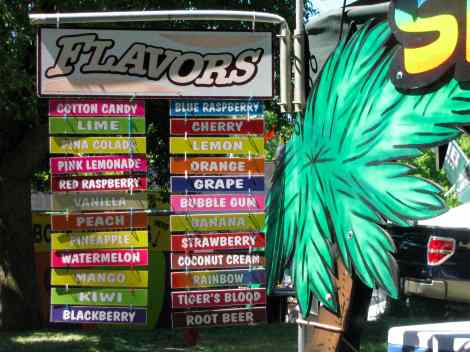
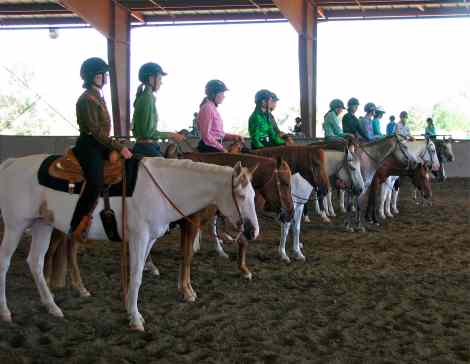
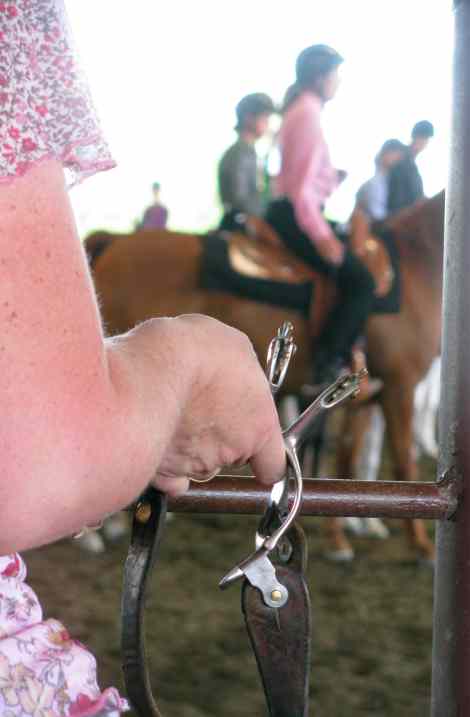
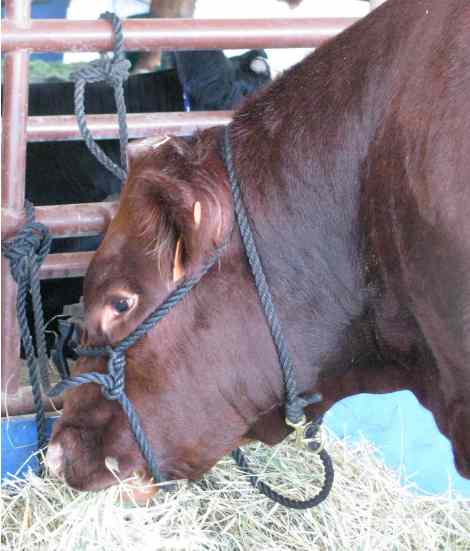
I did snap some photos, just of things that interested me.

FlavorsAtTheFair.jpg

YoungEquestrians.jpg

Spurs&YoungRiders.jpg

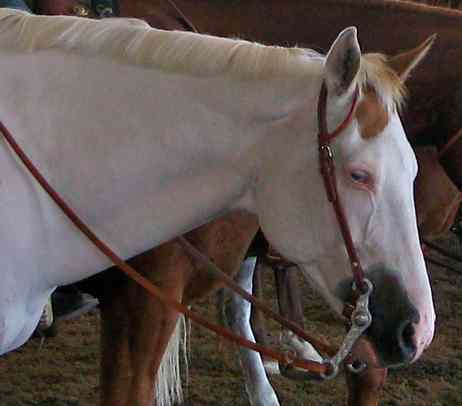
Blue-eyedHorse.jpg

BoyInT-Shirt.jpg

BeefyCow.jpg

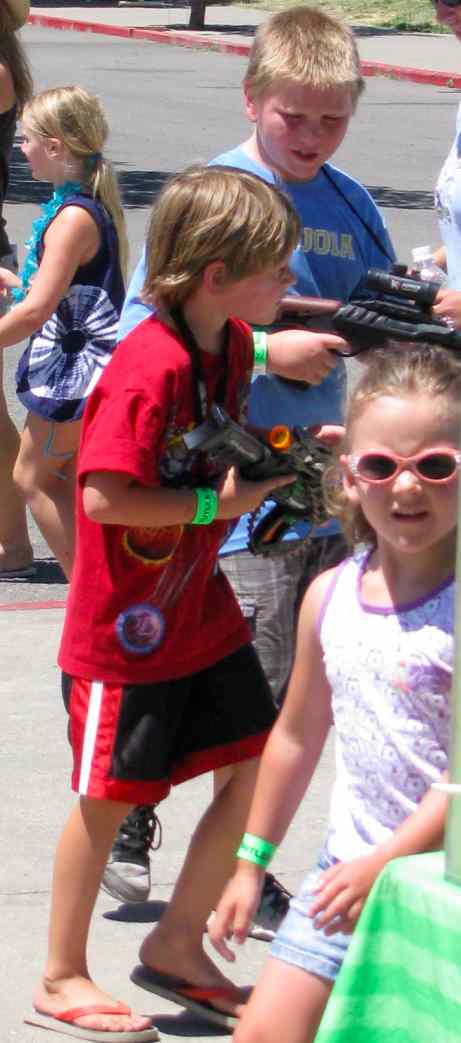
BoysWithGuns.jpg

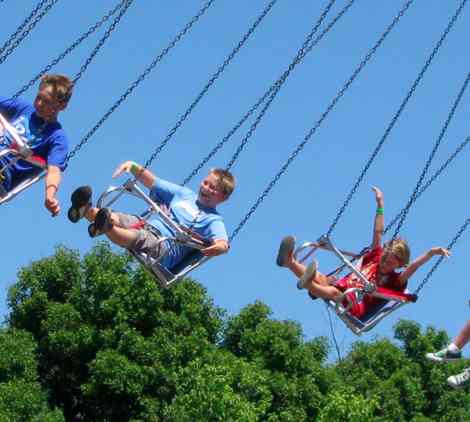
BoysInTheAir.jpg

GirlsInBoots.jpg

EmbroideredGriffon.jpg

Embroidered Griffon, in the Needlework section.

Horse.jpg

GirlWithT-Shirt.jpg

MarineHummer.jpg

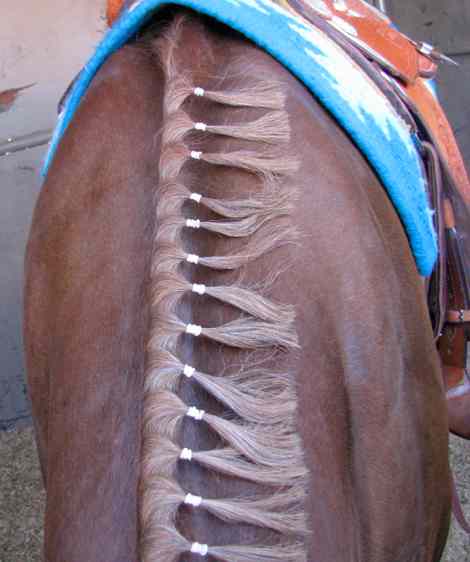
HorseMane.jpg

Man-Dog-Frisbee.jpg

RideShaft.jpg

Siskiyou wildflowers we found today

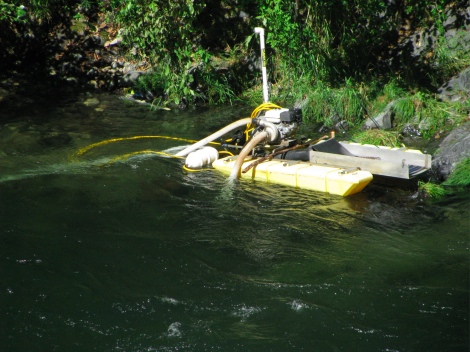
We walked along a dirt road above the Applegate River. Warm and dusty, with the cool green river below. On the far side of the river there are houses, and tied up below one was a gas-powered dredge for sucking up sand and silt from the bottom or edges of the river, in search of gold. Any gold around here is powder or very small pieces; nothing you would think of as a nugget is likely to be found. Since the moratorium on dredging in the rivers of California more dredgers are mucking up our rivers.

dredge on the river.jpg

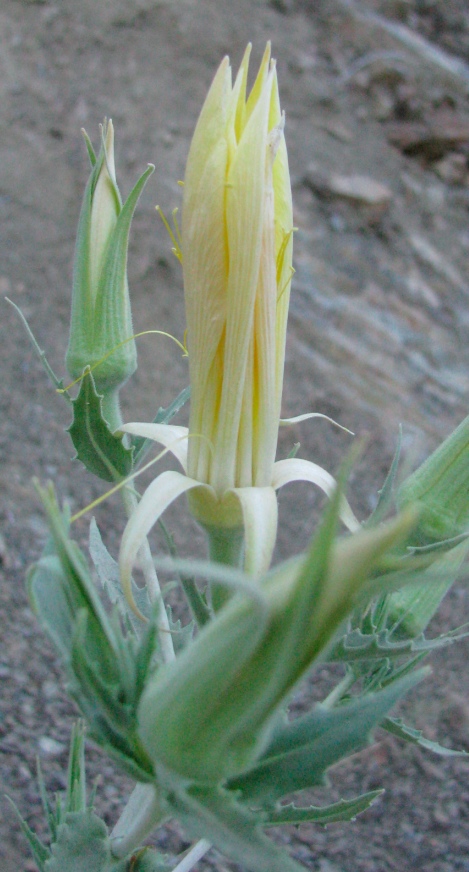
The first wildflower we saw was the rather spectacular Blazing Star (Mentzelia laevicaulis).

Mentzelia laevicaulis, Blazing star1.jpg

This plant likes dry gravelly roadcuts such as this one, and is found from British Columbia south through much of the West. Accounts say the flower is fragrant but we didn’t notice that.

The buds are a pale dawn yellow. Or the color dawns should be.

Mentzelia laevicaulis, Blazing star, flower buds.jpg

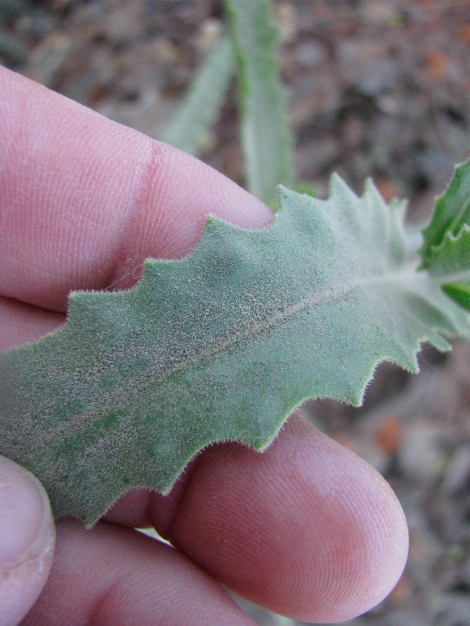
The leaves are distinctive: hairy and scalloped.

Mentzelia laevicaulis, Blazing star leaf close-up.jpg

Mentzelia was named by Linnaeus in honour of Christian Mentzel (1622-1701), a German physician, botanist and lexicographer. The epithet laevicaulis (laevi = smooth + caulis = stalk) refers to the comparatively smooth stems of this species in comparison to other Mentzelia species.” For this information on etymology, often impossible to find, I am indebted to the University of British Columbia’s Botany Photo of the Day site.

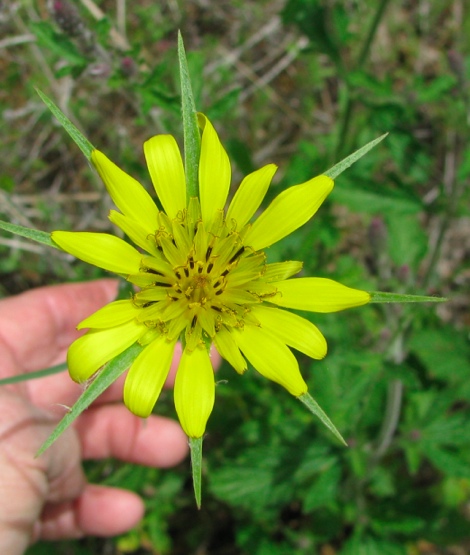
The flower is somewhat similar to one we saw back in mid-June, Yellow or Western Salsify (Tragopogon dubius), below. But Yellow Salsify is introduced, not native, and regarded as invasive in many areas. The root is “edible raw (slightly bitter, celery-like taste with a hint of cucumber) and cooked (smells like parsnips). The plant exudes a milky latex when cut.” Another species, T. porrifolius, has been known since Roman times for its edible roots and young shoots, and even cultivated. Europeans who introduced T. porrifolius to North America too, where it’s considered an “agricultural weed”, not quite as bad as “invasive”.

Tragopogon dubius  -Yellow Salsify,Western Salsify -flower.jpg

The Yellow Salsify leaf is narrow, not scalloped, and smooth rather than hairy.

Tragopogon dubius  -Yellow Salsify,Western Salsify - leaves.jpg

Large patches of Rabbit-Foot Clover (Trifolium arvense) lined the road. This is another European introduction.
Rabbit-Foot Clover.jpg

We were too late to see any with fresh blooms, so here they are from A Photo Flora of the Devon and Cornwall Peninsula.

Rabbit-foot clover, Trifolium arvense.jpg

Among the patches of Rabbit-foot Clover there were many spiderweb constructions like this one, a foot wide or more,

Spiderweb, flat with tunnel 1.jpg

consisting of layers of horizontal web and a funnel at the back where the spider awaits. While we did not see the spiders, the webs are said to be characteristic of species in the genus Agelenopsis, which are called Grass Spiders or Funnel Weavers. They’ve recently been found to be venomous, with a toxin that affects substances involved in muscle movement in insects and in mammals, though humans would seem to have little to worry about unless walking barelegged through the webs and stirring up the spiders. However, the toxins might have medicinal potential (anti-seizure medication). There are good photos of the spiders here along with information at bugguide.net.

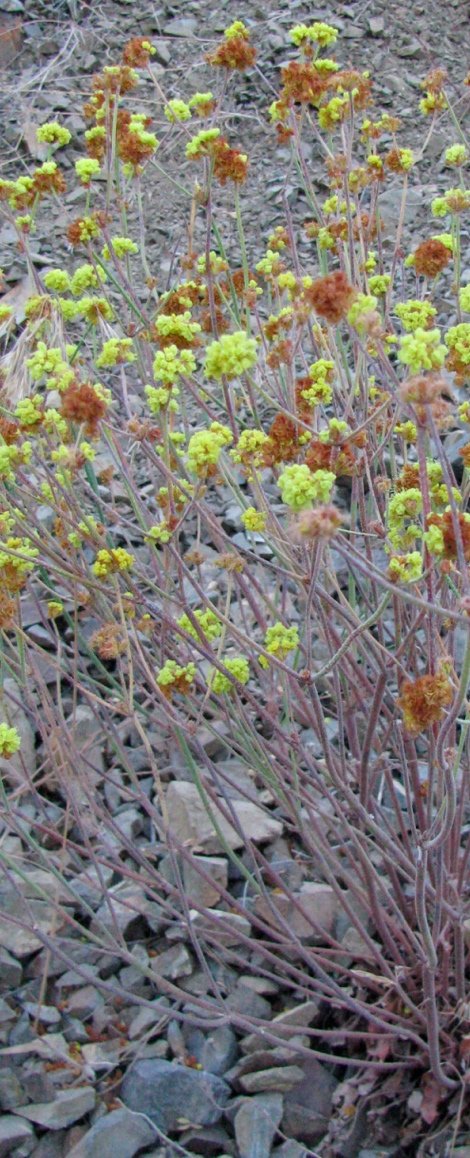
Here are the yellow blooms of what we are sure is some species of Eriogonum, which includes plants often known by some variation of the common name “Wild Buckwheat” (although they have nothing to do with the crop plant that provides buckwheat flour).

Eriogonum spp..jpg

The flowers were borne on leafless thick reddish stems.

Eriogonum spp. base of leafless bush.jpg

We tried to figure out which Eriogonum this was, but were having no success. Finally we came across this remark about another unidentified Buckwheat,

This plant has frustrated me for years — it is so very common here but I’ve yet to find a picture or a description in any of my layman’s field manuals. However, my favorite A Field Guide to the Plants of Arizona by Anne Orth Epple, did have this to say: almost all species of eriogonum are difficult to identify, even for the expert botanist. For the amateur, simply recognizing wild buckwheat as such is an accomplishment. So there! Epple says that there are 53 species of eriogonum in Arizona.

Okay, we’ll rest on our laurels of having tagged it as a Buckwheat! The author above goes on to say of her plant, “As the season wears on, the flowers gradually turn a brilliant rust color”, and that seems to be true of ours as well, perhaps another Eriogonum characteristic.

Eriogonum spp. bush.jpg

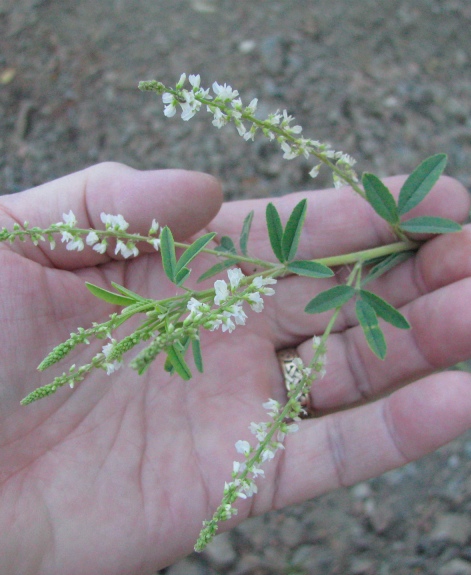
One final plant turned out to be another clover.

White sweet clover, Melilotus albus .jpg

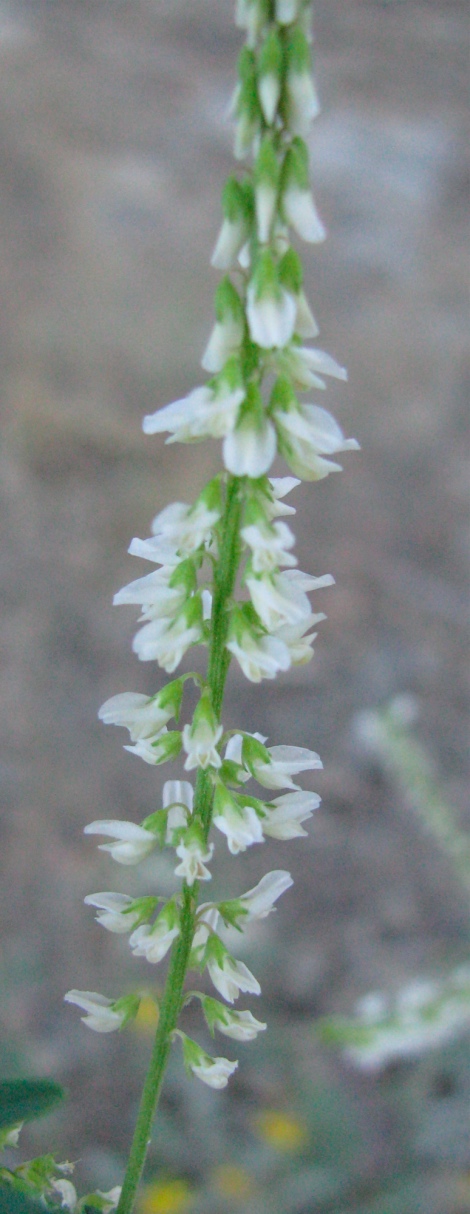
This is White Sweet Clover (Melilotus albus).

White sweet clover, Melilotus albus -closeup.jpg

Pretty and delicate looking, but another European introduction, for cattle forage, which has turned out to be invasive.

And by then Jack the mastiff thought it was time to call it quits, even though he’d been down to the river for a drink.

Jack thirsty, tongue lolling.jpg

He drank from his water dish back at the car, and then supervised while we drove home.

Siskiyou wildflower roundup

There are quite a few wildflowers we’ve photographed on our walks, and identified, that I haven’t had time to research and write about. Here are some, with just species, date seen, and brief comments. All are natives unless otherwise noted.

We are very much amateur botanizers and we don’t key out these plants, so our identifications are not authoritative and we welcome helpful comments from more experienced folks. Each species account in this post is followed with a link to a page about the species, on the Pacific Northwest Wildflower site of Mark Turner, who really is an expert. In fact he and Phyllis Gustafson “wrote the book”, Wildflowers of the Pacific Northwest (Timber Press Field Guide). If you have an interest in PNW wildflowers, or are a hiker/fisher/etc., you should go out and buy this book right now, preferably from your local independent bookstore. Knowing more about the flowers you see really adds to your enjoyment of the outdoors.
Daisies& Oaks.jpg

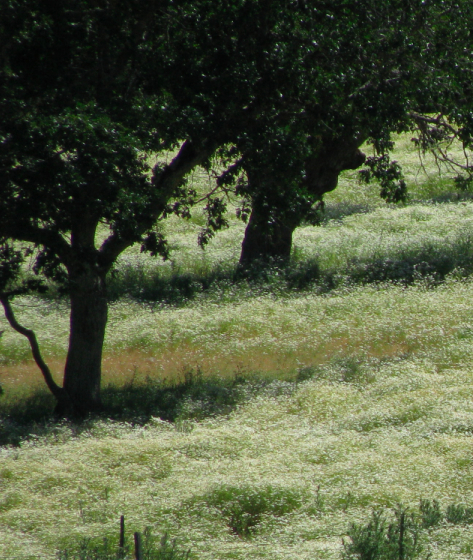
This pasture, not far from Applegate Lake, has been invaded with a daisy-type flower—all the white areas in the photo above.

Anthemis cotula.jpg

It’s probably Anthemis cotula, common name Stinking Mayweed. The leaves of this species have an unpleasant odor, but there was a slippery gravel slope down to the edge of the field, and we didn’t get close enough to confirm that. Next time.

It’s been introduced, and is a native of Eurasia. Find in Turner here. [photographed July 4, 2010]

Blue dick closeup.jpg

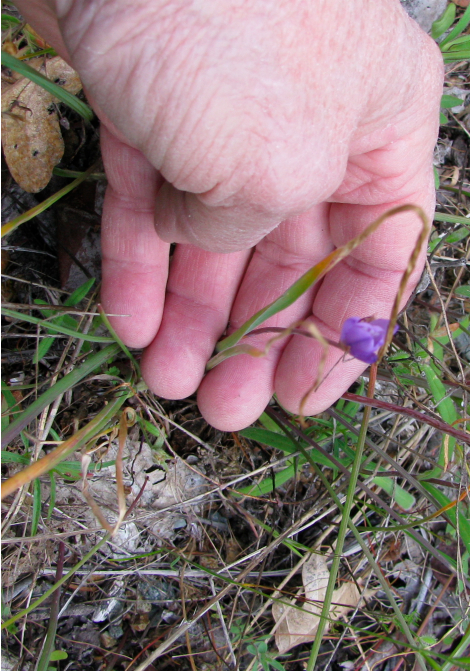
Above is Dichelostemma capitatum, common names Common Brodiaea or Blue Dicks. This was taken back in on May 4, 2010, but I’ve seen others in bloom at higher elevation (around 2000 ft) even now.
Blue dick leaves.jpg

Height varies from 6 to 27 inches, and leaves are flat.

Blue dick flowers.jpg

Find in Turner here.

The plant below is a native shrub that also serves as an ornamental, and I saw it in bloom last week in Portland (OR). It’s found from British Columbia south through California, and also in Missouri and Tennessee. If we are to see it in our area it would be in sunny but wet spots.

Spiraea douglasii full plant.jpg

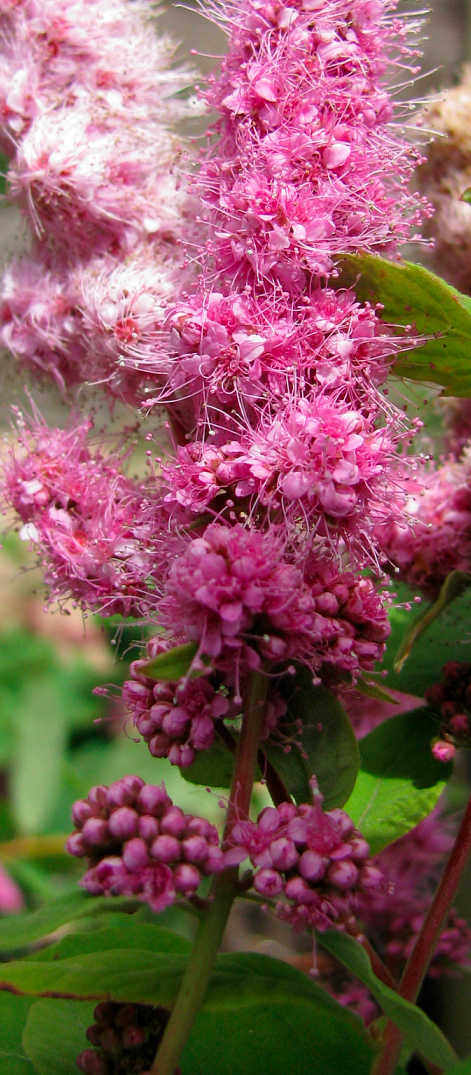
This is Spiraea douglasii, common name Rose Spiraea or Hardhack.
Spiraea douglasii.jpg

I was unable to resist the temptation of investigating what “hardhack” means, but all I found was that the same common name is also applied to unrelated species, such as Potentilla fruticosa (back in 1885, here), Collinsonia canadensis, and Arrowwood Viburnum (Viburnum dentatum) as well as to other Spiraea spp. But this may be a clue: another common name for Spiraea douglasii is Ironwood, and Native Americans used the wood for mat-making needles, spoons, and spears. Photographed July 2, 2010 in Portland OR. Find in Turner here.

Below is Arnica cordifolia, common name Heartleaf Arnica.

Heartleaf Arnica, Arnica cordifolia .jpg

Photographed May 9, 2010. Find in Turner here.

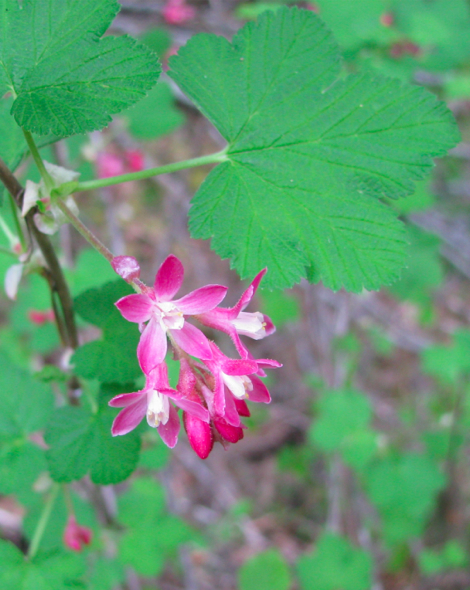
An earlier post showed Ribes roezlii, the Shiny-leaved Gooseberry. Below is Ribes sanguineum, Red-flowering Currant.
Ribes sanguineum.jpg

The genus Ribes includes currants and gooseberries. What’s the difference?

Gooseberries and currants, although closely related, can easily be identified by examining the canes and fruit color; gooseberry canes normally produce a spine at each leaf node and bear roughly grape-sized berries singly or in groups of 2 or 3, while currant canes lack spines or prickles and bear 8 to 30 smaller fruit in clusters. Figure 1. Cane and fruit of (A) Gooseberry and (B) Currant.

Currant-gooseberry drawing.jpg

Drawing and text from University of Minnesota Extension page.

Photographed May 6, 2010. Find in Turner here.

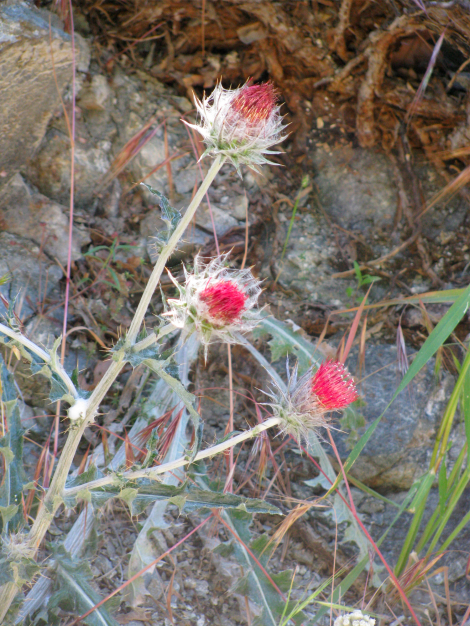
Next is one of the thistles, a plant group which people find hard to appreciate. But this one is unlikely to show up in your backyard or pasture, and perhaps that will make it easier. We think it is Cirsium occidentale, Snowy Thistle—Turner calls it uncommon—and it is growing in a dry rocky area next to a road. We’ve seen the plant re-appear there for perhaps a decade and its seed has only produced two other plants in that time.
Snowy thistle roadside.jpg

The plant blends in with the greyish stones, having greenish-grey leaves and also a heavy coat of hairs like spiderwebs. Another of its common names is Cobweb Thistle.

snowy thistle closeup.jpg

Perhaps the dramatic white pollen, seen below, is the origin of the “snowy” part of the common name.

Snowy thistle macro1.jpg

Photographed June 21, 2010. Find in Turner here.

Hydrophyllum fendleri, Fendler’s Waterleaf, is a moisture-loving plant with large leaves and fuzzy flower-heads.

Hydrophyllum fendleri Fendler's waterleaf - 1.jpg

It has a spreading habit and often grows where vegetation is lush, so that other plants cover it up.

Hydrophyllum fendleri COSEUP.jpg

Photographed on May 2, 2010. Find in Turner here.

Last, this small sedum.

Sedum stenopetalum whole plant.jpg

This is Sedum stenopetalum, Narrow-leaved Sedum. Flowers are yellow according to standard sources, but Turner shows white as well. Photographed end of June, 2010. (Yellow blossom in lower left, below, is clover.) Find in Turner here.


Sedum stenopetalum, Narrow-leaved Sedum.jpg