NOTE: Four years after this post first appeared, it is still drawing comments from people searching for answers about chronic pain relief. I’ve learned a good deal from some of these comments, and in particular I want to remind readers that my experience with methadone is not typical in one respect: by the time I switched from other opioids to methadone, my most severe pain had been dealt with. My pain from fibromyalgia is chronic but not really bad if I manage my activities. A reader posting as Fireside Academy reminded me that we have to evaluate methadone (and other pain meds) “relative to the pain experience without it”: if my pain had stayed at the severe level it was at when I started with opioids, then methadone might have been a positive thing for me.
Almost all medication for chronic conditions is two-edged, so that we have to choose—are the benefits worth the negatives. All opioids present problems, yet other alternatives may be nonexistent. Go in with your eyes open, remember you need to retain control over the medication rather than letting it control you, and be sure you can rely on your pain prescriber to help you through the hard parts. I recommend scrolling down to Fireside Academy’s post (Feb. 19, 2012) to hear from someone for whom methadone is being beneficial.
I’m going to write the article I wish I’d been able to find when I was taking methadone for chronic pain. The degree of detail will probably make it of little interest except to those using methadone or considering it. (This is not a discussion of pain that results from a terminal disease, or from a disease that is temporary but severe, like pancreatitis. In such cases, opioids may be the best or only choice, and you are entitled to relief.)
I began taking morphine, and then methadone, for pain in 1997 because of crippling muscle-spasm-like pain, every day, from a long-untreated back injury. The injury had occurred in 1981; the orthopedists couldn’t see anything on x-rays, intimated that I was a malingerer, and wrote me off. Constant pain and disturbed sleep probably triggered the fibromyalgia that began to develop after a few years; by 1996 I was unable to work even part-time because of the deep fatigue of the fibromyalgia, its all-over body pain, and the back pain. At that point something had to change.
After finding no medical help in my area I found a pain doctor in another state and went to see him. He could see disc damage on an x-ray, and showed it to me. This is not particularly definitive: pain often exists without visible disk or vertebral damage, and visible damage often occurs in people who report no pain. But this doctor could see my pain in my face and how I moved, and that seemed to be the clincher for him regardless of how the x-ray turned out.
He put me on morphine and made an appointment for me to come back for a lumbar nerve block. This would only last 3-6 months but during that time the muscles that had been clenched with pain for 16 years could gradually unclench and be exercised. The nerve block worked exactly as planned, and I exercised consistently and was able to be more active. As far as back pain goes, I haven’t had a day since which was as bad as any hour in the previous years.
But the fibromyalgia pain remained. It’s felt all through the body: the pain threshold is reduced so much that light pressure feels like pain, a pat can be like a slap, and it hurts to lie in bed, sit, walk, lean against a wall. Extra pain is felt for days or weeks in muscles that get used even a little. As a result I wanted to stay on the morphine pills, thinking that it probably helped.
I couldn’t afford to keep traveling to see the out-of-state doctor so I looked around for a local pain doc and this time I found one. He switched me to methadone when the morphine became less effective. The methadone’s effect, too, became less over time.
Lesson #1: opioid effectiveness lessens as the body becomes accustomed to it. Opioids are not, therefore, a very good approach to chronic pain.
I think this second doctor was hoping I’d want another lumbar nerve block, a more profitable therapy than simply seeing somebody every couple of months for a prescription renewal. As it became clear that continuing exercise was keeping my back pain under control, he stopped inquiring after it, and began to treat me rather brusquely. I was still under the impression that the methadone might be lessening the fibromyalgia pain so I wanted to continue it, but I was feeling more pain, not less. The doctor raised the dose somewhat; he (rightly) resisted my efforts to raise it more, but never discussed any other pain relief measures with me. Gradually I became aware that while I was physically dependent upon the methadone, enduring the side effects and the 6 doctor visits a year, I was receiving diminished benefits or maybe no benefit at all.
Addiction and chronic pain
Here a word about “addiction’’ and “physical dependence”. During the time I took methadone, I have seen a total change in how the medical establishment thinks about addiction and pain patients (though not all members of it have made this change). In a nutshell, addiction is now the term for someone who is both psychologically and physically dependent on a drug. Pain patients rarely fit this definition: they rarely get any “high” from morphine, methadone, codeine, oxycodone, etc. and they don’t start taking it because of a psychological need to feel “different”. However, the physical dependence will cause the same withdrawal symptoms for the pain patient as for the addict, and constitutes a severe barrier to anyone trying (as I did) to get off of methadone without the support of a knowledgeable doctor.
Doctor or pusher, patient or customer?
Why was I trying this without help from my pain doctor? Because he refused to help, denied that there were any pharmaceutical aids for getting through withdrawal, and ignored my reports of having gone through painful withdrawal five times and failed every time.
One of the realities about being dependent upon a pain medication is that you are then dependent upon your doctor. Don’t like him? Not sure you are getting the best treatment? Better not change or you may be viewed as a “doctor shopper” and drug seeker. Of course you’re seeking drugs––that is what the medical establishment has offered you––but the hysteria from the war on drugs, another one of those “long wars,” has infected the practice of medicine with fear and prejudice. Why fear? The DEA, or state licensing boards, occasionally pounce upon pain doctors for prescribing opioids to too many people, or in cases of accidental overdoses. Doctors can lose their licenses, be pilloried in the media, even be charged with responsibility for someone’s death.
So the situation can easily become much like that of a drug dealer and his customers: the doctor/dealer (skeptical of your professed pain) has contempt for you, or is on guard watching for signs of scamming but is obliged to treat you and perhaps wants your money, while you come to loathe him but tailor your every word and expression to avoid getting cut off. I hope that most doctors do not fit this description. But the patients, who are locked into a relationship with wildly disparate power on the doctor’s side, must inevitably come to an uneasy awareness that their wellbeing depends on a “controlled substance” which is entirely controlled by the doctor, and which carries a public stigma of association with being a junkie, a weakling, a fraud, or all three. This is not like knowing you depend on your physician for your insulin prescription or your heart medication. A diabetic or heart patient is never suspected of getting medication for personal pleasure, or in order to sell it to schoolchildren.
When I first visited the callous pain doctor, who “treated” me for ten years, I was required to sign a form. He described it as a contract but all the obligations were on my side. I had to agree that I was aware of undesirable effects from opioids including dependency, and that if I lost a prescription or a month’s worth of pills I would not expect the doctor to write a replacement prescription. The importance of this latter provision is not one that can be understood by the patient until later. Once you’ve become dependent upon opioids, and experienced even mild withdrawal because you’ve forgotten a pill or been a few hours late, you realize in a different way what it would mean to lose a prescription and be without the drug for a month. Each month’s prescription form had to be picked up by me personally rather than faxed to the pharmacy or renewed by telephone (state law I believe, although the out-of-state doctor’s prescriptions had been mailed or faxed to my home-town pharmacy), meaning that I made about 120 trips of an hour or more each way, not counting stopping and waiting at the pharmacy on the way home. That’s 120 opportunities to have my wallet stolen, or lose it, or to get in a wreck in which the all-important piece of paper might be destroyed. In such a case, maybe my oh-so-compassionate doctor would have believed me and replaced the prescription that was in my stolen wallet, but the withdrawal is so severe that you feel such a risk is unacceptable. And you cannot avoid this consciousness of risk, it’s inherent in the dependency, and so there is constant anxiety, insecurity.
All medical conditions with unknown mechanism of action (such as fibromyalgia), or with no objective tests to demonstrate their reality and severity, are considered suspect both by the public and by some of the medical community. Psychiatric conditions such as schizophrenia and Post Traumatic Stress Disorder have for decades been discounted or blamed on some form of willful failure to suck it up and get on with your life. Any pain not associated with a known visible verifiable medical condition is also likely to be dismissed. Those medical practitioners who dismiss your pain also dismiss you. The more you seek help from them for this sort of pain, the less credible you are, the less seriously you are taken, until finally you may be seen as merely a stereotype: hysterical woman, somatizing patient with imaginary self-serving pain, seeker of drugs and disability.
For these reasons and others (such as fearing he’d simply cut me off, or reduce my dose and ignore any increase in pain), I never pressed my pain doctor about helping me to quit methadone until the last year or so. For his part, he demonstrated to me via a custom-mixed liquid containing dissolved methadone, of a strength unknown to me, that…what exactly did he demonstrate? After a month I came back and said my pain was worse; he said, “But the dose in the liquid was higher than you had been taking in pills.” Therefore the methadone doesn’t help your fm pain (and, implied, maybe you’re faking the whole thing). I quibble with this methodology but I was ready to accept his point and it was after that event that I made my longest most serious attempt to get off of methadone.
Over five months I cut the dose gradually (unknown to him: another result of the doctor/pusher fear-relationship is that the patient hoards medication––you’d be a fool not to––so why let him know I’d reduced the dose?) until for two months I took only a crumb twice a day, then once a day. Then I stopped altogether. The first day was okay; I’d been having various withdrawal symptoms for months anyway. But then it got worse, much much worse. For the next seven days I slept not at all. I quit even going to bed, just sat in the living room reading or surfed the web. After the first few nights my fatigue was so bad I couldn’t read, I just sat, or walked around. Nights were endless. My body was often wracked with bone pain, as if every bone were being crushed. My mind was flighty and ungovernable, my guts were gnawing as if I were starving. The methadone was right there in the bathroom but I persisted for seven days. On the eighth day I realized that 1) my symptoms were not lessening in any way, and 2) I couldn’t take another night without sleep. Within three hours of taking one of the hated white pills I was in bed asleep; the next day I felt almost normal.
The next time I saw the pain doctor I told him I’d done this and failed, and asked him how he might be able to help. Was there no sleeping medication, no tranquilizer or other drug that could be used temporarily to blunt the withdrawal? “No, there’s no magic pill,” said he. I felt like a demanding child who had asked for fairy dust to fix her boo-boo. When I pressed him, reiterating the symptoms, he said they were merely psychological.
Maybe I need a new doctor
Now I felt some solid ground under me. Research on methadone withdrawal had not yielded me much but I had found out what some of the symptoms were, and mine were common. This guy was wrong, and I had hope of finding someone who knew better. I tried my primary care physician; she told me that my symptoms were psychological. Just like him, she said that I could not possibly have had symptoms for seven days, because “even heroin is completely out of your system in 3 or 4 days.” She used the same exact phraseology as the pain doctor, whose office was in the building next door. Right, I thought. I’ve been seeing this woman for eight years and she parrots someone else’s words, not trusting my report of what I experienced. My pharmacist was more well-informed and confirmed what I’d experienced, giving me a few leads on alternatives.
The pusher drops the hammer on me
I dithered around for a few months, hesitant to step off into the unknown of a new doctor. Then came the day when my pain doc informed me blandly that he was “no longer comfortable prescribing methadone” for me since my pain was mostly fibromyalgia. His plan was to phase me off over the next two months. Sixty to zero (milligrams), zoom. I tried to be calm and asked “What about the withdrawal? I told you that it was intolerable, how are we going to get me through that?” “Those symptoms were merely psychological; it’s up to you to deal with them.” He was adamant. I was panicked. Abandoning calm, I asked him what he was going to do when I ended up in the ER. He ignored me. That was the last time I saw him. But I do hope he is comfortable.
It was the psychiatrist that I see (because fm has limited my life so much that eventually I became pretty depressed) who really came through for me. When I told this kind man about the two-month ultimatum, he took me seriously––he actually knew about the symptoms of withdrawal––and went online to research the matter further. In a physicians-only discussion group he contacted a pain doctor experienced in managing methadone withdrawal who confirmed my experience and spoke of alternatives. The phrase “managing methadone withdrawal” was like water in the desert. My psychiatrist recommended a different local pain doctor and I went to see him.
The new pain doc allayed my fears immediately. Yes, the symptoms I’d had were common. Yes, they were awful. Methadone, he said, is a synthetic opioid and it gets into the body more persistently than heroin; it can even be stored in the bone marrow, probably causing that unbearable bone pain I’d had. But there were ways to minimize the symptoms, there were choices, and he was sure we could get me through it.
Lesson #2: There are caring and knowledgeable pain doctors out there but you will have to know what you are looking for, and work to find them. Make a list of questions to ask people who recommend a doctor, and to ask doctors themselves.
From my experience, obvious questions for a prospective doctor would be:
What are the short- and long-term health consequences of the drugs you may prescribe? What different conditions may be contributing to my pain, and for each, how effective are the drugs you are prescribing? If and when I need to go off of opioids, how will you help me? How much experience do you have in this end of the process?
And ask yourself if you are willing to hand over so much control of your life, to this individual and this drug. I don’t travel much, but every time I did I worried about losing my methadone, or having it confiscated by airport security. Once when I travelled out of the US, to Chile, I was so concerned I got the pain doc to write me a letter verifying that I was authorized to have this controlled substance, this narcotic, so that I could feel less likely to end up in a foreign jail or have the medication taken away.
The first day I saw the new doctor, October 5, was the last day I took methadone. Surprisingly, he put me on morphine, a lower dose than the methadone, because it would moderate the withdrawal from the methadone and be easier to quit. (According to him, heroin and methamphetamine are also easier to quit than methadone.) And he prescribed sleep medication. He told me to call if things got too tough and he would adjust the treatment to work better.
The first two weeks were the worst; I was weak as a kitten and slept 18 hours a day without sleeping pills. After that, my strength gradually came back, and I began sleeping just at night (with the sleeping pills). I had some physical symptoms such as endless gnawing in my stomach, and constant sinus headaches and earaches, but after the first two weeks my mind and psyche began to feel completely different, as if I were coming out of a ten-year tunnel. My husband remarked on it: I was more talkative, personable, cheerful, confident. He felt he was seeing a person who had been gone for ten years. So did I.
Lesson #3: methadone does a lot more to you than just causing constipation, sweating, and sedation.
The amount of morphine was cut each month, and withdrawal symptoms lessened. On Feb. 5 the morphine ended––an anticlimax, no real difference!
I still have the sinus headaches, milder now, but if they never go away I am still so much better off that it’s hard to believe.
Life after methadone
I’m glad to see the well-known methadone side-effects go, of course; my attacks of sweating used to be so bad, even when I was sitting still, that my hair would be drenched, and outside activity would cause sweating so heavy that I would feel faint. This is much improved now, though still not normal. Then there’s constipation, which sounds like a minor thing, but when I had a colonoscopy I was told that I was at risk of getting diverticulosis because of the methadone-induced constipation.
As for sedation, at one point early on my old pain doctor put me on dextroamphetamine because I was too sleepy to do anything. It was easy to see why the amphetamines are so popular; I felt wonderfully energetic, smart, lost weight…but not a good long range life plan. Without the amphetamine the methadone caused fatigue on top of that caused by fibromyalgia.
And my old pain doctor had told me once, in an offhand manner after I asked about periods of breathlessness, that longterm methadone use could cause heart problems, but not mild ones like breathlessness. “How would I know if this was occurring?” I asked him. “You wouldn’t,” he said, “you’d just have a life-threatening episode of heart failure.”
But it was the completely unexpected and, as far as I can tell, undocumented changes that really have made life different. Chief among these are the psychological changes that I described above. I’m more outgoing, more able to engage in activities with small groups of people (though––typical of fibromyalgia––crowded places/noise/smoke/bright lights make me exhausted very quickly, so I avoid them). My depression used to edge back despite anti-depressants, but that has not happened in the three months since I went opioid-free. I feel more pleasure in life. Both my attitude and my energy are improved.
While taking methadone I must have dreamed at night, but remembered dreams perhaps once or twice a year. That made me feel cut off from a part of myself, and I am pleased that now I’m remembering dreams a few times a month.
Physically also there were unexpected results. I no longer eat between meals, feel no interest in doing so. If my stomach growls I am not seized by uncontrollable impulses to eat something. And what I eat has changed. Always a chocolate lover, I’d worked up to 1 or 2 candy bars every afternoon while taking methadone; the pull was almost irresistible, and the pleasure though short-lived seemed like something I could not give up. Now, the candy bars from last October are in a box in the pantry; in six months I’ve eaten one, and in the middle realized it was really not all that great. We got a box of See’s candy after Christmas and I enjoyed it a lot, but I can take it or leave it. The opioids are notorious for giving junkies a sweet tooth, so maybe I should have anticipated that my chocolate craving would go away. But it’s worth noting that the craving vanished during the first month off methadone, while I was still taking morphine.
Here’s one that seems very much out in left field: for years my vaginal tissues have been extremely tender and painful, even bleeding, and my gynecologist had concluded it was just post-menopausal stuff. I declined full-on hormone replacement therapy and nothing else we tried helped. Two or three months off methadone, and this began to change. No, I cannot see any causal connexion either, but that doesn’t mean that there isn’t one. It’s not psychosomatic, because I never thought about it as something that might be related to methadone. I mention this––even though I am not really comfortable discussing such matters in public––because I’ve never seen this in any list of methadone effects, and no woman would ever think to associate the two.
My reason for this post is to get more open discussion of all these issues related to chronic pain management so that others will have better information, feel less stigma about pain and opioid use, and make better decisions. I was ignorant, felt helpless and trapped, and let the matter go on for far too long; nothing can give me those years back.
Before you try opioids for chronic pain
Consider all these factors carefully before you embark on long-term use of methadone, morphine, codeine, oxycodone, and so on: Efficacy will lessen over time. Side effects, including ones you never expected and may not attribute to the drug, will increase. Dependency comes with the drug, including dependence upon the prescriber.
Educate yourself about your condition and any proposed drug. Choose your provider very carefully. Try other pain-relieving or pain-distracting methods: at any dose you can live with, opioids don’t entirely relieve pain, so you may as well look for another source of partial relief that is adequate without all the baggage of the opioids. Look for a way to feel a sense of some control over your pain: find out what aggravates it and what distracts you from it.
Don’t be too skeptical to try things like warm-water exercise or swimming, resting with your favorite music, or finding a hobby or interest that distracts you and brings you into the “flow” mental experience described by Mihaly Csikszentmihaly (whose books (see footnote 1) are a lot easier to read than his name is to spell!). “Flow” is that mental and emotional state of being so involved in a positive activity that time passes without notice. Its requirements are that the activity be something you want to do, and something that is challenging (with lots of potential for you to improve and grow) while not being so hard it’s frustrating and unpleasant; and having clear goals––my goal is to get better at this, and my next step is to try such and such. People can experience flow in all sorts of work, craft and art, and mental activity: knitting, fishing, fixing a car, playing music, doing puzzles, reading, learning something new, you name it. Think of a kid putting together a model airplane or choosing to practice something over and over. It’s basic to the human brain, but is pushed away by stress, time pressure, worry, and so on. Get back to it at times and for that time it can push away pain and stress, and give you a little feeling of control and of life being worth living in spite of pain. Things that have worked for me include reading, doing online research, bird-watching and other outdoor interests, writing, good conversation, watching movies, and drawing or painting (in which my goal is to get better, and considering where I started that is no problem! but it’s okay, I see little improvements and I enjoy the process itself, which is key).
Some kinds of pain respond to mild exercise, which can produce endorphins, distract the mind, and tone the body so it supports movement with a bit less pain. Go slow and be determined. There’s increasing research to show that chronic pain often causes depression, and depression can be treated. If you are carrying pain around every day, that doesn’t mean you also have to carry around depression. And, it’s possible to use some opioids like codeine off and on, just when the pain is worst.
Keep learning about your condition, keep asking questions, keep trying positive things that might help even a little.
None of this is meant to minimize pain, tell you to wish it away, or imply that you “should” be able to control it better than you are. Pain is real. Until people live with chronic pain they don’t realize how draining it is, mentally and physically.
But. As the saying goes, “Every day above ground is a good day,” and it is possible to make (almost) every day better.
Footnote
(1) For example, Finding Flow: The Psychology of Engagement with Everyday Life. Your library probably has some of his books, or do a websearch and read an article or two. Some lectures of his are online here.
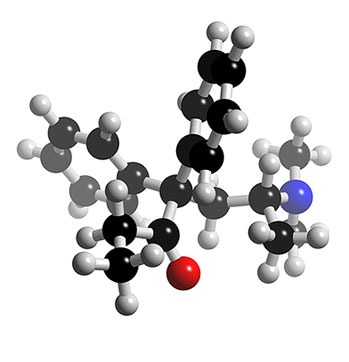
Image above: Methadone molecule, from 3dchem.com




 nosleepingdogs

