A short comment on the economic bailout

So many bloggers and talking heads comment on big political issues that I have steered clear of them; believe me, I rant a-plenty in our living room! But in my lifetime only two other distinct events have stood out, at the time of occurrence, as of such great importance for the future. The first was the assassination of John F. Kennedy; the second was 9-11 (though most of the disaster that has followed it has been chosen and created by the Bush administration). And this is the third.

I’ll keep my comment short. Here’s the email I just sent to Nancy Pelosi.

Dear Madam Speaker,

My husband and I, lifelong Democrats, commend you for your courage and good judgment in standing against the bailout bill. I also heard your interview last Thursday on NPR and was well impressed with your arguments and articulate presentation. I wish we could vote for you.

But be assured that many out here agree with your position. I do not know if you share my belief, that our economic structure is not just tilted drastically in favor of big interests–everyone knows that–but is unsound at its core, based on speculation and unending growth that cannot continue. Hence a series of bubbles that burst. The citizen always gets hurt whether by mortgage foreclosures that can devastate a family for decades, or by inflation, paying for bailouts, increasing the national debt, and so on. The war may be a distraction, as one of its purposes, from all this.

There is no “free market” when the biggest players set the rules and then are bailed out when they break them. At this point in history a free market is neither desirable nor possible. Let’s start changing it to a market that benefits the majority of people (not just by providing low-wage jobs) and benefits the planet and our succeeding generations.

Respectfully,

[me]

rural southern Oregon

Feminism, from the ground up

Progress toward equal rights for women. Toward women being human beings first, broads/gals/chattels not at all.

How do we measure it? Women’s earnings as a percentage of men’s have soared over the past 56 years, from 63.9% to 77.8%! [This is for year-round, full-time work, figures from U.S. Women’s Bureau and the National Committee on Pay Equity.] In another 56 years we’ll reach just over 90% at that rate. Or participation in Congress? 91 women serve in the 110th Congress: 75 in the House (55 Democrats and 20 Republicans) and 16 in the Senate (11 Democrats and 5 Republicans). Actually the 110th started out with 94 women but 3 died, frail creatures that we are. And that is a new record! 94 out of 535, or 17.5%.

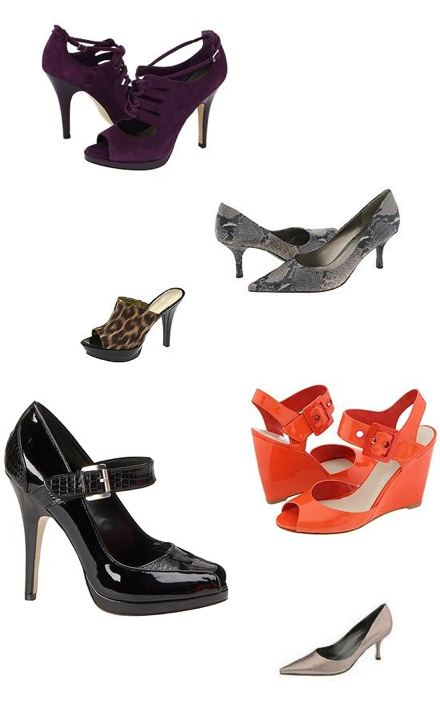
Okay, all these statistics are depressing and boring. How about something easier? I’ve got it! As long as I open the newspaper and the big sale at, say, Macy’s, is selling shoes that all look like this

six_shoes.jpg

then I know we are not doing well.

That imposing black number bottom left, the lady paratrooper model, has a heel four and one-half inches high. A third of a foot. Gives the girl soldier that added height that commands respect, and she can also rip the enemy’s throat out with a heel swing, or maybe just step on his toe and butt-stroke him with her rifle stock. She’ll be a career soldier, too, because after wearing shoes with 4.5 inch heels for 4 years, she will no longer be able to wear anything else.

The little silver pump bottom right may not add so much height to its wearer, only three inches or so, but everyone should give her a lot of respect for the suffering she smilingly endures, jamming a roughly square-ended human foot into a leather funnel as pointy-ended as an icing-squirter, for eight to ten hours a day.

And every single one of these designs sings out the same paeans to femininity with which Western poets have garlanded us for centuries: our grace and beauty, our delicacy, our nurturing tenderness, our oh so many gentle virtues…

The real religion of the world comes from women much more than from men – from mothers most of all, who carry the key of our souls in their bosoms. ~Oliver Wendell Holmes

The Woman-Soul leadeth us
Upward and on!
– Johann Wolfgang Von Goethe

Lead on, women, but ditch the fetishistic footwear, eh?

[All ugly shoes shown are trademarked by their manufacturers who are completely responsible for such triumphs of function and design. As a trade-off for not having permission to use the photos, I won’t embarrass the companies by identifying the brands depicted. Seems fair to me.]

In China, some things never change

Even with the world’s attention upon their country during the Olympics, the Chinese hive leaders can’t successfully pretend to be other than what they are.

In its effort to look good, the government named 3 parks in Beijing as demonstration zones. To demonstrate there, one needed to apply for a permit. Not only have no permits been approved, but some applicants—including two women in their late 70s—have been punished. A grassroots activist who applied for a permit was last seen being taken away in a car by officials.

Here’s part of the report from the Guardian:

Chinese authorities have sentenced two women in their 70s to a year’s “re-education through labour” after they applied to protest during the Olympic games, a relative said today.

This week, officials said they had not approved a single permit for a demonstration, despite designating three parks as protest zones….

Wu Dianyuan, 79, and her neighbour Wang Xiuying, 77, sought to protest about their forced eviction from their homes in 2001. They went to the Beijing Public Security Bureau four times this month to request permission to demonstrate in the new zones — created for the Olympics to counter criticism of the limits to political expression in China.

Their applications were neither granted nor denied, but on their first trip PSB officers interrogated them for 10 hours, Wu’s son, Li Xuehui, told the New York-based group Human Rights in China.

On August 17, the two women received an order dated July 30 from Beijing’s “re-education through labour commission” sentencing them to one year for “disturbing the public order”. It placed restrictions on their movements and warned that if they breached any of the requirements they would be sent to a labour camp. The system does not require formal hearings or allow appeals.

Li told the Associated Press the women were at home under the observation of a neighbourhood committee. He said no cause had been given for the order.

These are two resolute and stouthearted old women; they made three more visits even after being interrogated for ten hours the first time, and apparently went back again after their sentence of a year’s re-education through labor. At that final visit, “officers said they could not apply to protest because of their sentence.”

What a foolish illusion (or vicious pretense), to think (or say) that allowing China to host the Olympics would result in any substantive positive change there. China has put on a big show in Beijing while earthquake victims in Sichuan are still homeless, and multi-national corporations made money. Plus ça change, plus c’est la même chose.

ChinaGymnast.jpg ChinaQuakeVictim.jpg

Left, He Kexin, one of China’s allegedly 16-year old gymnasts, performs on the uneven bars. Kexin won the gold medal. The Associated Press/Amy Sancetta. Source.

Below, An elderly woman mourns her grandson buried under the debris of a collapsed building after the Sichuan earthquake. Daily Mail. Source.

Little Blue Books

LittleBlueBooks2.jpg

Before Project Gutenberg, there were Little Blue Books. Before paperback books (not pamphlets, but books) came along in the 30’s, there were Little Blue Books. My remaining library of them is shown above, and below are a few with a paperback of the same period.

LittleBlueBooks1a.jpg

“Little Blue Books” was the popular name for a series of tiny publications printed on pulp paper, with slightly heavier paper covers, by E. Haldeman-Julius between 1919 and 1951. Emanuel Julius was the son of Russian immigrant Jews; he said his life was changed when, as a boy, he got hold of a 10 cent publication of Oscar Wilde’s grim poem The Ballad of Reading Gaol, and read it straight through oblivious to the freezing weather in which he sat. At that moment, he thought “how wonderful it would be if thousands of such booklets could be made available.”

All of us who were bookworms in childhood can identify with that experience. I don’t remember much of my youth but I can still recall exactly where I was when I read the end of To Kill A Mockingbird: sitting on a log in some neighbor’s front yard, having put the paperback in my pocket before setting out ostensibly to take the dog for a walk. And on a difficult bus trip to San Francisco, I buried myself in the Little Blue Book of Macbeth and came across the encouraging lines “Time and the hour/run through the roughest day.” I was on the bus with my parents, but seated separately; they were barely speaking to one another, having had another of the fights over my father’s extreme stay-at-home habits–this one followed by “Well, maybe you’d like to go to San Francisco (about 40 miles)?” “Driving and parking there is too awful.” and so on, until we ended up a silent trio on Greyhound.

I still have that 15-cent copy of Macbeth, and most of the other LBB’s that I acquired. The titles in this line included a lot of classics, not just because they were copyright-free, but because Haldemann-Julius had an agenda: a mixture of the classical, the progressive, and the useful.

Here’s a sampling of titles [my apologies for such a long list, but, I confess, when I started looking at the lists on the Penn State Axe Library site, I found it hard to stop selecting examples!] :

1a. The Ballad of Reading Jail, by Oscar Wilde. First Edition. [Cover title.] People’s Pocket Series. [1919] [

1b. Rubaiyat of Omar Khayyam. Second Edition. [Cover title.] People’s Pocket Series. [1919]

3a. Walt Whitman’s Poems. [1920.]

17c. On Walking, by Henry David Thoreau. [1921.]

60a. Emerson’s Essays. [1920.]

90c. The Mikado, by W. S. Gilbert.

94a. Trial and Death of Socrates. [1920.]

95a. Confessions of an Opium Eater, by Thomas De Quincey. [1920.]

60a. Emerson’s Essays. [1920.]

140a. America’s Prison Hell, by Kate O’Hare. [1920.

1001. Tales of Italian Bandits [by] Washington Irving. [1927.]

1002. A Dictionary of Sea Terms [by] Frank Wells. [1926.]

1003. How to Think Logically [by] Leo Markun. [1926.]

1004. How to Save Money [by] J. George Frederick. [1926.]

1005. How to Enjoy the Orchestra [by] Isaac Goldberg. [1926.]

1006. A Book of Children’s Games [by] Grace Perkins. [1926.]

1008. The Origin of Religion [by] Joseph McCabe. [1926.]

1009. Typewriting Self Taught [by] Miriam Allen DeFord. [1926.]

1010. A Handbook for Amateur Magicians [by] George Milburn. [1926.]

1011. Pocket Dictionary, English-French, French-English [by] Vance Randolph. [1927.]

1014. The Best American Jokes, edited by Clement Wood. [1926.]

1017. Without Benefit of Clergy [by] Rudyard Kipling. [1926.]

1019. Bluebeard and His Eight Wives [by] Clement Wood. [1926.]

1020. Why I Am an Infidel [by] Luther Burbank. [1926.]

1021. Italian Self Taught [by] Isaac Goldberg. [1926.]

1022. An Odyssey of the North [by] Jack London. [1926.]

1162. Mystery Tales of Ghosts and Villains [by] Montague Rhodes James, Katherine Rickford [and] Charles Dickens.

1163. The Policewoman’s Love-Hungry Daughter and Other Stories of Chicago Life [by] Ben Hecht.

1177. Woman and the New Race [by] Havelock Ellis.

1178. The Chorus Girl and Her Lover’s Wife and Other Stories [by] Anton Chekhov.

1179. How to Make Desserts, Pies and Pastries [by] Mrs. Temple.

1182. How to Make Your Own Cosmetics [by] Gloria Goddard.

1183. How to Play Checkers [by] W. Patterson.

1185. The Weather: What Makes It and Why [by] Clifton L. Ray.

1186. A Handbook of the Rules of Golf, compiled by Harold Dix.

1188. Sex and the Garden of Eden Myth, a Collection of Essays on Christianity [by] Maynard.

1189. Pin Money: One Hundred Ways to Make Money at Home [by] Gloria Goddard.

1190. What Price Love? [by] Anton Chekhov.

1286. Do Human Beings Have Free Will? A Debate: Affirmative: Professor George Burman Foster, Negative: Clarence Darrow.

There are some patterns here: how-to and self-improvement, progressive politics and “free-thinking” about religion and society, and, of course, plenty of titles containing the words “love,” “sweetheart,” and “sex.” But there are also the large and small lights of Western Literature: Shakespeare, Goethe, Tolstoy, O. Henry, Poe, Hawthorne, Melville, Balzac, Ibsen, Mark Twain, Rabelais…there seems no end to Haldeman’s inclusiveness, until one thinks that a complete set of Little Blue Books would make the ideal accompaniment to a desert island existence. And cheap, too; in the beginning they retailed for a nickel; by the early 1960’s the price was all the way up to fifteen cents. So the 39 titles above would have run you a total of $1.95 at a nickel apiece, $5.85 at 15 cents.

Haldeman published some works he’d written himself, including

1287. Brann, Who Cracked Dull Heads [by] E. Haldeman-Julius.

1288. America’s Fakirs and Guides, Surveying the Leaders and Misleaders of Our Day [by] E. Haldeman-Julius.

The Brann of LBB 1287 was William Cowper Brann (1855-1898), an opinionated American journalist and newspaper owner who attacked aspects of religion, social pretense, and anything else that roused his ire. He died in Waco, Texas, after being shot in the back by a man who objected to his vituperative editorials about Baylor College; Brann turned and shot his attacker dead before walking to the jail, from which he was soon released. He died the next day.

I encountered Haldeman’s magnum-opus-in-small-pieces early in my teens. I was questioning religion and social conventions, fascinated with adventure tales, and lived with my nose in a book. Mostly I went to the library, but Little Blue Books were portable, full of surprises and oddities, and felt in some way personal. I must have bought them by mail, because I never remember seeing one in a bookstore or on a drugstore book rack. I now know that J. Edgar Hoover had mounted a campaign against Haldeman and his publications in the 1950’s and forced most bookstores to stop carrying them. The Little Blue Book series was, in its day, “edgy”: marked by progressive politics, including socialism, and consideration of forbidden topics like free love, homosexuality, evolution, birth control, and women’s rights. You can see that a cranky repressive guy like Hoover couldn’t allow such pollution of the American intellectual landscape.

Despite J. Edgar, 300 million Little Blue Books were published between 1919 and 1978, so I suppose those who blame our moral decline on things like Pokémon and gay marriage can just add Haldeman’s smart-alecky elitist smut to their list.


LittleBlueBooks3.jpg